Wednesday, 5 February 2014

Snow!

We live in the land of lake-effect snow - between two lakes - Georgian Bay (Lake Huron) and Lake Simcoe. This means that when you look at the radar, everywhere else is clear and there's a big green line connecting those two lakes and we are underneath it.

Looking for us? Try the big green blob.

Lake-effect snow: streamers, snow squalls, snow bands, whatever the name - it results in a fair bit of the white stuff. We hear these terms on the radio a lot so it's not surprising that Beans wanted to know what it was and how is it different than regular snow? And why doesn't her uncle have any snow?

Sometimes it's hard to find your toys.

The answer is that it's not different than regular snow. Snow is snow - it's precipitation that falls in a frozen state. Clouds form when water vapour condenses (goes from gas to liquid) and hang out in the atmosphere, then when they get too heavy they fall - and because it's cold it's not as water, it's as tiny ice crystals. It is actually usually so cold in the clouds that most rain actually starts out as snow, even in summer, but melts on its way down! As Bunny learned the other day from her favourite show Wild Kratts, snow isn't just water - there is dirt, bacteria and other random things in there from the atmosphere that help the snow freeze faster and form the crystalline structure, so she's not so sure about catching it on her tongue anymore. A bunch of those ice crystals fuse together and form a snowflake. Sometimes they melt and refreeze and then you get the harder ice balls and not so much the nice fluffy stuff. And sometimes those go sideways in the wind and hit you in the face while you dig out the car.

Pretty little crystalline structures (this one is not my pic)

But overall snow is snow - what is different in lake-effect snow is not the what but the HOW.

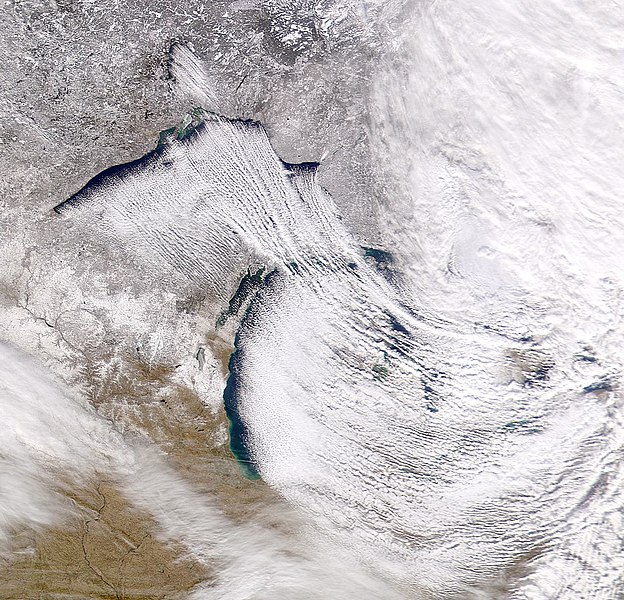
Whenever you have a large body of water it has an effect on the local weather. When the atmosphere is cool and the cold winds blow across the lake water, which is significantly warmer, it picks up the water vapour, freezes it and because so much has accumulated it dumps it right there on the shore. So whoever is on the prevailing leeward side of a lake get the snow jackpot. Because of where we are situated - surrounded by water, we get most of our snow from the lake when the wind is from the west, and then some from your regular winter storms too. There is snow in the forecast every day this week. Uncle Chris doesn't live on the leeward side of a lake, even though he does live near a large lake (Ontario), so most of the snow picked up by his lake gets dumped on the fine people of upstate New York. (NOTE: as I finished putting this together, southern Ontario got dumped on by a winter storm, so Uncle Chris has snow now).

Lake-effect snow in the Great Lakes (also not my pic!)

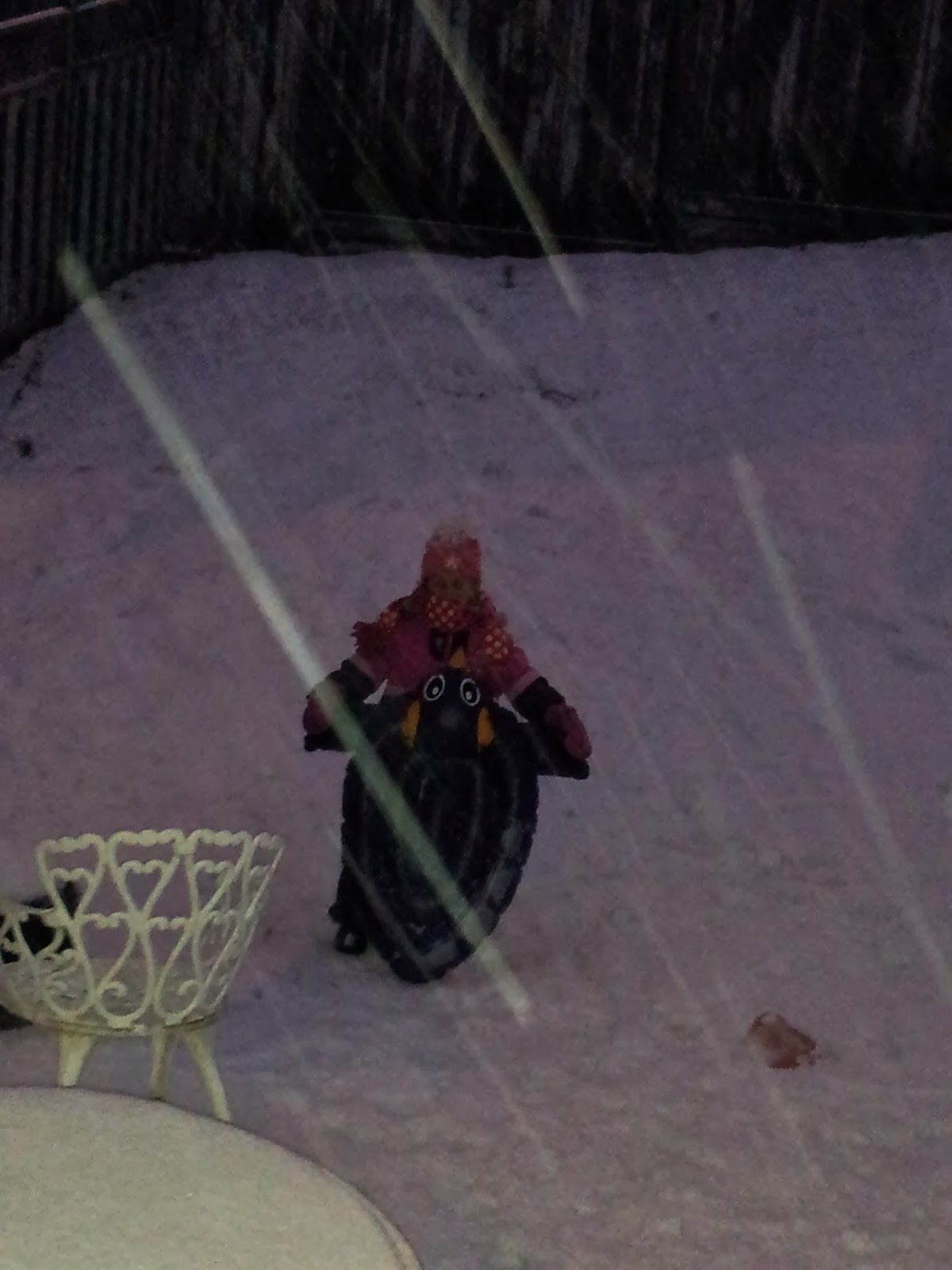
Luckily both girls seem to have a love of snow. Bunny a little more than Beans, who still seems to manage to get snow inside her snowsuit, no matter how much I attempt to get her all tucked in. Bunny will spend hours flinging herself down a hill, which is good because snow here starts in November and lasts until April (Started in October this year... and the odd early May snow flurry is not unheard of) and our yard happens to be a hill.

A young Bunny one November...

...and this was taken at Easter


I've been told people like pictures, so to end, a wintry collection of pictures of snow and snow related fun. Mostly because I had fun looking for old snow pictures!


This year. But we have more now.

If you have a lot of snow, you might as well celebrate it!


A walk in the snowy woods.
A lovely snow seat in the snowy woods.
WALKING IN THE SNOWY WOODS IS HARD!

Bunny. Toboggan. Snow Squall.
This is standard practice for her.

No post on snow is complete without a snowman! There. Done.


http://www.weatherwizkids.com/weather-winter-storms.htm
http://adventure.howstuffworks.com/outdoor-activities/snow-sports/snow-maker1.htm
http://en.wikipedia.org/wiki/Snow
http://en.wikipedia.org/wiki/Lake-effect_snow

Thursday, 23 January 2014

Skating Questions

Skating on New Years Eve
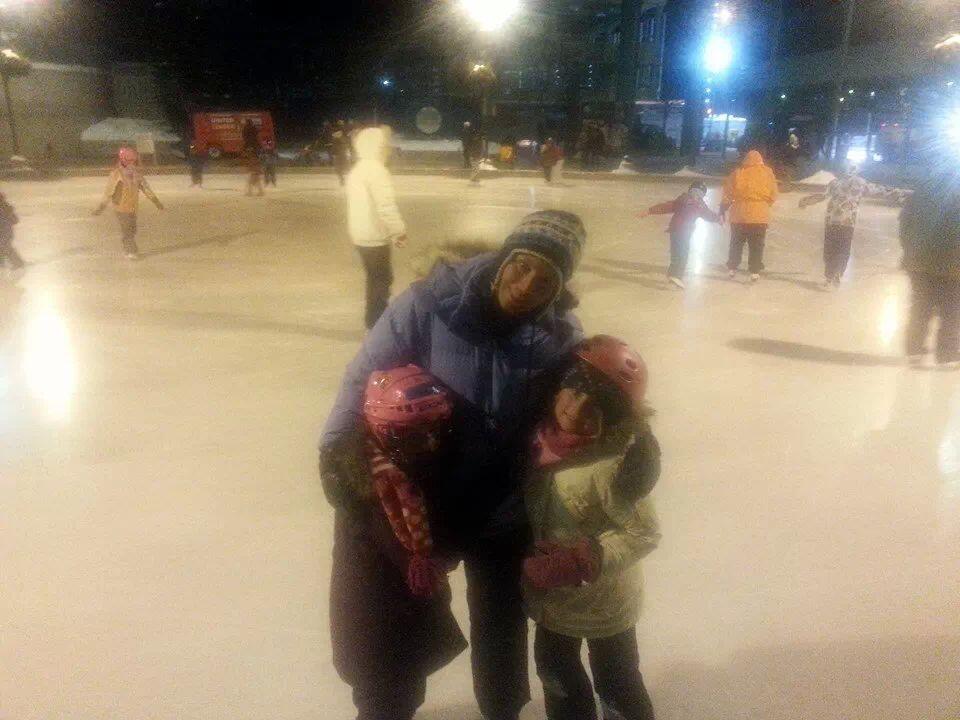
It's been a busy winter so far, and I seem to be spending it in a lot of it on ice - skating lessons, hockey games, hockey practices, hockey tournaments... at least some of the games are mine! And when we have free time, what do they want to do? Skate. But all this gliding around (and skate tying) has led to another batch of short answer random questions, so I present to you our skating conversations (minus all the requests for hot chocolate).

How does the Zamboni work?
Well, let me start by saying that Zambonis are awesome, and every kid (ok, adults too) pretty much has a fascination with them. They were invented in 1949 by Frank Zamboni in California of all places! They are technically called "ice resurfacers" and Zamboni is a brand name, but it's way more fun to say so I'll stick with that. They have a few parts - a snow container, hot water tanks, a wash water tank, a conditioner, and a brush. The conditioner is lowered to the ice with a large, sharp blade to shave off the top layer of ice. The shavings are then  sprayed into a large snow container. The wash water sprays the ice removing any snow and dirt and a squeegee and vacuum picks the water back up, this water is filtered and reused. Some have a board brush that cleans the boards when the machine is on the outside of the rink. Then a layer of hot water (60°C) is put down from a sprinkler pipe and a cloth towel dragged behind which fills up all the skate marks by melting the ice below and bonding to it. And we are glad it does all this because fresh ice is the BEST.  


How come it can snow and rain at the same time?
So apparently the answer "because it's Ontario" is not sufficient here. Although it's true - plus you can add in ice pellets for a trio of winter precipitation all at once! According to wikipedia in the US they call all three together "wintry mix" which we all agree sounds like it should be a type of candy. Here we refer to rain/snow as "sleet" or "November" but apparently in the US the term sleet is used for the ice pellets (which we just call ice pellets). It is is also not to be confused with freezing rain, which is actual rain that freezes on contact (and caused all kinds of problems south of here around christmas). So when does the rain/snow mix happen? When it's snowing but the atmosphere down in the lower part is above freezing, so some of it melts, but some of it doesn't and you get a mix of soft snow and rain.

The moon is following me. Why is it out in the day?
The moon isn't just out at night, it orbits Earth independently of the sun. So, when it's here in daylight hours you can see it when the sun illuminates it. And that's why sometimes at night you can't see it.

Popcorn!
Another post skating staple, popcorn is the seed of a specific kind of corn, Zea mays everta, that has a hard, impermeable (waterproof) hull that is filled with starch and water. When it's heated up the water turns to steam and the starch turns to a gelatinous substance. The pressure build up until the hull bursts and the starch puffs out - the pressure hits 135psi! There needs to be about 14% moisture inside for the popcorn to pop, and it ends up about 50 times it's original size. And then we stuff our faces with it (OK, the last part isn't part of the science answer, but it's a key step in popcorn).

http://www.popcorn.org/ForTeachers/TeachingGuide/WhatMakesPopcornPop/tabid/88/Default.aspx


Why is ice slippery?
 Sometimes there is a question with no good answer, because science just doesn't know yet. Although, physics is working on it. Could be friction causes the ice to melt a bit, could be that ice inherintly has a "liquid" or "liquid-like" layer on it that causes the slipperiness, could be some combo. But whatever makes it slippery also makes it fun!

Now get some blades on and go have fun!
(and don't forget the hot chocolate after)


...and yes, I do want to drive the Zamboni.


Tuesday, 31 December 2013

Hibernation

Beans could easily sleep through the winter. At 5 years old she has already mastered the snooze button (or "hit the hat" as she calls it - her alarm clock is Perry the Platypus in his trademark fedora) and the whole blanket over the head with "5 more minutes" routine in the morning. This increases exponentially in the winter when it is dark the entire time we get up, eat breakfast and get to school. Bunny on the other hand is up bright and early each day (which has proved useful when she wakes me up when I have slept through my alarm) and has thankfully learned to make her own breakfast on weekends (although the first time she woke me up to tell me she did so, which completely defeats the purpose of making her own breakfast). She now also helps Beans make breakfast if she gets up, although I did have to point out that 3 entire big shredded wheats is an awful lot in one bowl even if they are strangely packaged that way. Beans did admire the pretty sunrise on the way to school the other day, so maybe she's coming around to the morning a little bit.

But this is not a post about how to get Beans up in the morning (although suggestions on that are appreciated), what she wants to know is how do the bears stay "asleep" for the whole winter? 

Hibernation is different than sleeping - there are physical changes that go along with it while sleep is a change in mental state. Brain waves during hibernation as closer to awake ones than asleep ones. In fact, when animals wake up from hibernation they can be sleep deprived and require a lot of sleep in the next few days to recover.

So first we need to figure out what hibernation actually is. It's a form of torpor, which is a term used to describe metabolic suppression in animals - so where they drop their usual body functions for energy conservation. It can be triggered by a lot of things - starvation, thirst, dark, cold, heat, etc. Hibernation is the seasonal form of this where the body preemptively reacts to the threats are lower temperatures, lack of food and darkness. Typically larger species like bears prepare by storing body fat, which will sustain them over the winter. Smaller species, like chipmunks and squirrels, don't have the capacity to store enough for entire time, so they food cache - hiding lots of food around for when they wake and need replenishing. Which is why when you move the lawn furniture in the spring there's a whole whack of nutshells under it.

Bears.

Nom Nom Nom
By Traveler100 (Own work)
 [CC-BY-SA-3.0 (http://creativecommons.org/licenses/by-sa/3.0)]
via Wikimedia Commons

For a while people debated whether or not what bears did was actual hibernation because their body temperature doesn't drop very much. But that was all solved when they took a look at metabolic suppression, and they do lower their rate about 75% below what it usually is, so that pretty much answered that right there - there is a huge shift in how their body functions (more here!) Some more northern bears will not eat or drink for up to 8 months! Instead of slowing things down by dropping their core temperature they instead use vasoconstriction - which means they slow blood flow to their extremities to conserve energy for the core of the body. And the craziest part? They recycle their proteins and urine - nothing in, nothing out for months at a time. That ability is now being studied to help with organ transport, kidney diseases and space travel!

The prep actually begins in the summer with the cramming of themselves with as much carbs as they can find to gain as much as 30 pounds a week! Those fat stores break down over the winter to provide calories and water, the muscle tissue breaks down to provide protein. Our bodies do this when we are starving too with one main difference - bears are able to replace their proteins using urea (a part of urine, a waste product) and we can't - ours accumulates until it becomes toxic. Bears win.

http://news.nationalgeographic.com/news/2011/02/110217-bears-hibernation-warm-sleep-animals-science/

 Another cool thing bears can do (there's really no end to it...) is delayed implantation. Although mating takes place way before hibernation, the actual pregnancy is delayed until the bear's body figures out if it's able to sustain it through hibernation. If there's not enough fat then the egg will abort, otherwise there's a signal that triggers the egg to implant and the pregnancy to go through. Sometime around January she wakes up, gives birth and goes right back to sleep. Now THAT is how you do labour.

So, can people do it?

Probably not. There have been a few studies that try to emulate it, using freedivers, but a natural trigger in humans just isn't there. And there are a few unverified anectodal cases and work on "suspended animation". But it's ok, because well - despite it all, we really like winter. And bears don't get to toboggan. 


More on hibernation: 
http://www.pbs.org/wgbh/nova/nature/bear-essentials-of-hibernation.html
http://science.howstuffworks.com/zoology/all-about-animals/hibernation.htm
http://en.wikipedia.org/wiki/Hibernation
http://www.pbs.org/wgbh/nova/nature/bear-essentials-of-hibernation.html

Sunday, 24 November 2013

Stomachs in Reverse

Most of last week Beans and Bunny were not outside. Beans and Bunny were inside. Throwing up. The girls have recently been struck by stomach viruses. The dreaded "tummy bug". Bunny went first, throwing up on the walk to school. Then Beans a few days later, as we stood getting her hockey equipment out of the van in the arena parking lot. All over her rainboots (I know, thankfully she was wearing rainboots!). I used her water bottle to wash her off because clearly we weren't going to be using it for hockey that day. As a bonus we got to talk about scavengers again because the Ring-billed Gulls came to eat the eggs and toast that were now all over the lot.

This prompted a discussion between Bunny and I about viruses in general and her body's defenses against them. There's a few different tactics based on the type of virus - sometimes it's runny nose and coughing and sometimes it's vomiting (and we've been through them all) - for your body to try to rid itself of the virus. But what Bunny was really interested in was more the how - if food is supposed to go through your digestive system in a downward fashion, why does it all of a sudden go the other way and how is it doing that?

So, vomiting, throwing up, puking, blowing chunks (technically emesis) - is the forceful expulsion of the contents of one's stomach through the mouth and sometimes the nose. (Thanks wikipedia). And there's a ton of underlying reasons why it happens but regardless of the why, how the event itself happens is pretty consistent.

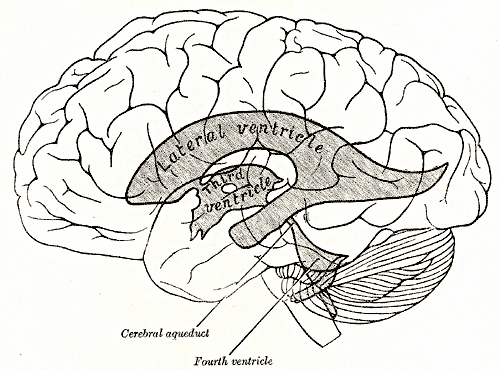
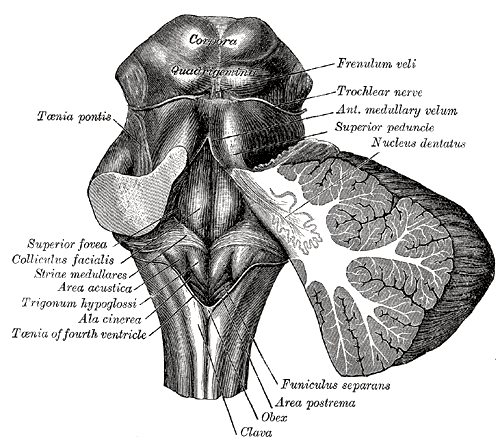
Your brain has a "vomit trigger" zone. It's in the fourth ventricle of your brain and is called the area postrema. The stimulation of this zone, by various methods, is what causes your body to start the expulsion routine.

These are from Gray's Anatomy (the book, not the show):
 

So there's a few ways to get this party started (although often this kind of ends the party) through chemoreceptors and that can be through blood-borne toxins and drugs, the vestibular system (which we talked about with motion sickness), cranial nerves through your pharynx (gag reflex), central nervous system (stress and psychiatric issues) and the enteric nervous system which tells your brain about the state of your gastrointestinal (GI) system. For Beans and Bunny it was that last one - irritation of the GI system through a viral infection - gastroenteritis, our tummy bug.

Once it's triggered it sends messages out to the rest of the body on how to react which results your body prepping itself for the big show - this happens quickly and gives you that "oh no, I'm going to puke" feeling. An amazing number of things happen simultaneously - you produce more saliva to protect your teeth from stomach acid, your lungs fill so that you don't breathe vomit later, you sweat and your heart rate increases. While all that is going on your small intestine starts to work in reverse and sweeps your digestive tract contents into your stomach, then your abdominal muscles contract forcing everything into your esophagus and then finally out your mouth. There are usually a bunch of sphincters (like one way valves) that prevent this from occuring randomly, but during this process they all relax. The stomach and esophagus themselves don't do much other than relax and provide an open pathway for exit. Bunny thinks this whole process is really cool, particularly the saliva protection thing, but overall it's still also really gross.


http://www.dizziness-and-balance.com/treatment/drug/emesis.html

There are two phases - the "retching" phase - where your abdominal muscles contract with the diaphragm and breathing muscles all together. Next is the "expulsive" phase - which is exactly as it sounds. Pressure has built up in the stomach thanks to the diaphragm and abdominal muscles. That pressure gets released when the esophagus releases what is usually a one-way valve and whoosh - eggs and toast in the parking lot. The only good part is that pressure release and some associated endorphins make you temporarily feel better.


As I have decided not to put in any pictures of people vomiting, here is a picture of Beans and Bunny enjoying a post-virus treat that did not end up in reverse. I am now living in a state of fear as it's only a matter of time...I know it's coming for me.


Monday, 4 November 2013

Mummy's Tummy (Crohn's Disease Awareness Month)

This question has come up from both Beans and Bunny a lot because it is a part of our daily life, as chronic diseases tend to be, and while I answer as best I can, it is one of the few things there isn't a good answer for.  But it also comes up from a lot of other people too. Why doesn't my tummy work right? (OK, maybe the grown-ups don't say "tummy")

November is Crohn's and Colitis Awareness Month, so I thought it was a good time to make people aware - I have Crohn's Disease. I was diagnosed 13 years ago and I do my very best to lead a "normal" life with it. Day to day life with Crohn's doesn't get talked about a lot because the symptoms themselves are a bit awkward to talk about - pain, nausea, vomiting, diarrhea, blood, mucus - not to mention the scramble for bathrooms. There's no good way to put that stuff in a casual water-cooler conversation. So, in honour of the month here's a bit about what it is, what it does and why my tummy doesn't work quite right. 


Let's start from the very beginning, a very good place to start. When we sing we begin with Do Re Mi. When we talk Crohn's we begin with the digestive system (Yeah ok, it's hard to rhyme "digestive system", my apologies to Julie Andrews). Digestive systems are pretty important, and also pretty long. There are a bunch of sections that all do a specific job:


from: http://www.ccfc.ca 


Mouth
It eats stuff. Like, say, chocolate. Nom nom nom.

Esophagus
The tube that connects your mouth to your stomach. Yup, pretty much just a tube that contracts.

Stomach
The food gets together with stomach acid and enzymes and breaks down into smaller pieces. Bet it's higher up in your body than you thought it was! The stomach actually does very little absorption of nutrients.

Small Bowel (Small Intestine)
It has three parts and digests the food and absorbs the nutrients. This is pretty much the most important bit there is because without it you can't get the nutrition out of food. 
    - Duodenum (about 8 cm in length) 
    - Jejunum (can be around 3 metres long)
    - Ileum (can also be approximately 3 metres in length)

Large Bowel (Large Intestine/Colon)
It's called "large" because of it's diameter, not length and is usually about 1.5 metres long. It includes the rectum and anus, which we have probably all heard of (and giggled about). It's job is to get the water and salt out of stuff and then store the waste until it is time to get rid of it.

So, in your average person these all work together and process your food efficiently and everything moves through according to schedule (except maybe for that sketchy taco...). But in those of us with Crohn's disease, the body's immune system attacks the gastrointestinal tract resulting in a chronic inflammatory disorder. This is the part that is tricky answering - WHY? I don't know. No one knows. There isn't an answer yet - research shows interactions between environmental, immunological and bacterial factors in genetically susceptible individuals (which is the science equivalent of "we're not quite sure yet"). 

The inflammation can occur in any part of the digestive system and in all layers of the tissues. The intestines become inflamed and ulcerous, and leaves behind scar tissue, which causes narrowing of the intestines, blockages and all kinds of other super fun things. As well, because the immune system is involved it is a whole body experience - arthritis and other random inflammation is par for the course. 

This is an awesome video that explains it better than I ever could:


And this comic is quite possibly one of the best explanations of living with Crohn's I've ever read, particularly the part about pretending to listen while in pain and finding random bathrooms. 


The part that is hardest to answer to the girls is "will you get better". Bluntly - no, I won't. But with meds, diet and a bit of luck I can live with it, so that's alright then. The most important part of living with Crohn's is a sense of humour, and online support groups are full of funny pictures and "bathroom humour" because to live with something like this requires laughing at it, otherwise it has too much power. Especially during colonoscopy prep. So, while I often make separate meals and carry toilet paper wherever I go - I go everywhere and do everything and I hope that that is the part they remember.

Thanks for listening. Feel free to ask questions!

If you'd like to learn more about Crohn's, this is a very good place to start:


Thursday, 31 October 2013

Halloween Spiders

When I was little my dad would keep us home from school on Halloween, he felt it should be a holiday. We'd go get dry ice, decorate the front hall with coffins that opened, witches that stirred bubbling cauldrons and my dad would drag his sound equipment upstairs, hide and scare the crap out of the neighbourhood kids. There were permanent pulleys on the ceiling in the hall, our house was famous. Then afterwards we would all play with the leftover dry ice in the kitchen while eating candy. So I have a special place in my heart for Halloween and all it's ghosts, bats and spiders. 

Me being spooky a long time ago

So, in honour of this, the most spooky of holidays, I give to you as a gift an assortment of facts about spiders, our eight-legged arachnid friends.
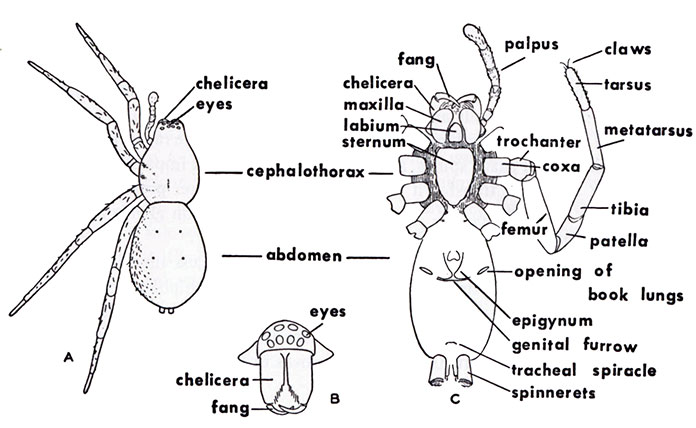
  • Spiders are not insects. Insects (Insecta) have three body parts - head, thorax, abdomen. Spiders are in Arachnida with ticks, mites and scorpions which have two main body parts - abdomen and cephalothorax (head/thorax combo).
Spider Anatomy
http://www.cirrusimage.com/spider.htm

  • Most spiders have eight eyes, some have none and some have 12. There are usually two main eyes with high resolution and secondary eyes that detect the difference between light and dark.
Jumping Spider
By Lukas Jonaitis from Vilnius, Lithuania (Eyes of Jumping spider - Marpissa radiata)
[CC-BY-2.0 (http://creativecommons.org/licenses/by/2.0)],
via Wikimedia Commons
Hogna Wolf Spider
By Thomas Shahan from USA (Eye Arrangement of a Hogna Wolf Spider)
[CC-BY-2.0 (http://creativecommons.org/licenses/by/2.0)], via Wikimedia Commons

  • There are 35-40,000 known spiders in the world. 3,000 in North America. But there are probably just as many out there we don't know about.
Theraphosa blondi © G Beccaloni
http://www.nhm.ac.uk/nature-online/species-of-the-day/biodiversity/loss-of-habitat/theraphosa-blondi/

  • The smallest known spider is Patu digua at  roughly 0.37 mm in size
  • The Giant Huntsman Spider has the largest legspan at 30cm
By Petra & Wilfried (Flickr)
[CC-BY-2.0 (http://creativecommons.org/licenses/by/2.0)],
via Wikimedia Commons

  • On average, spiders live for a year. Some spiders can live 3 to 4 years, and some tarantulas live for 25 years or longer.
  • Spider silk is a protein. It leaves the glands as a liquid and squeezed out. It hardens to become strong. There are several types of silk from specialized glands called spinnerets. Each gland produces a specific silk such as prey wrapping, support, sticky, and egg sac wrapping. 
  • Spiders can't fly but their spiderlings balloon! They spin silk until they are caught by the wind and float upwards. Some have been seen at altitudes of 10,000 feet!
Spiderlings!
By Brocken Inaglory (Own work)
[GFDL (http://www.gnu.org/copyleft/fdl.html) or CC-BY-SA-3.0-2.5-2.0-1.0
(http://creativecommons.org/licenses/by-sa/3.0)], via Wikimedia Commons

  • Fear of spiders is arachnophobia, if you have this don't read the next bullet point (or look at the pictures above, although I suppose you don't have it if you made it this far).
  • Studies show that you are never more than ten feet away from a spider. One estimate puts that distance at three feet. To be "spider-free" you'd have to go into space or Antarctica.
Beans and I getting closer than 3 feet to a tarantula
at Science North a few years ago

  • Hummingbirds use spider silk to help weave their nests.
  • In the South Pacific people make fishing nets from a spider's silk. Nephila spiders build webs between two bamboo stakes which can then be used to fish. They also eat the same spiders - apparently they are nutty and sticky like peanut butter.
Yum?
By J.M.Garg (Own work) [GFDL (http://www.gnu.org/copyleft/fdl.html) or CC-BY-SA-3.0-2.5-2.0-1.0
(http://creativecommons.org/licenses/by-sa/3.0)], via Wikimedia Commons

HAPPY HALLOWEEN!


For more Halloween creatures see our post on BATS!

Spider facts from:
http://animal.discovery.com/arachnids/spider-facts.htm
http://www.explorit.org/science/spider.html
http://news.nationalgeographic.com/news/2004/06/0623_040623_spiderfacts.html
spider clip art from: http://www.halloweenclipart.com/

Friday, 25 October 2013

Autumn Fever

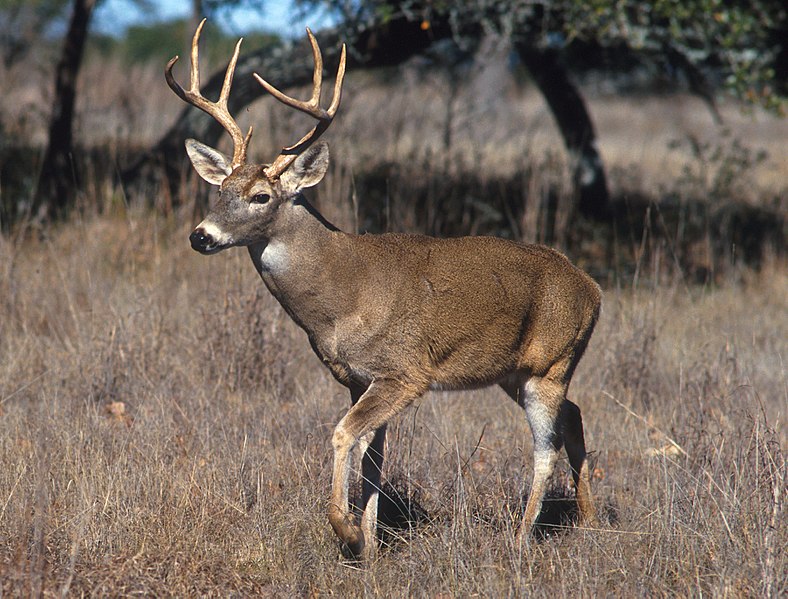
This time of year is deer season. Not just for shooting them - it's a big seasonal time for them to be out and about, stocking up some fat stores for the winter and, well, mating. I have seen quite a few on my morning drives lately and Beans and Bunny are always jealous when I tell them it was a deer day (or turkey day - everyone loves turkeys!). So it was very timely that I have a question from my cousin requesting an explanation on the rutting season in deer and some of the strange behaviour that goes with it - and specifically - why do they keep scraping up her lovely newly planted front yard?

You've heard of spring fever? Well in deer it's "autumn fever".


This spot is OK, but the grass is greener over there in Jane's yard...

Here in North America the rut for white-tailed deer (Odocoileus virginianus) is about 1-3 months long and is triggered by the shortening days, like so many fall wildlife activities. The daylight period shortening is a dependable sign that winter is on its way, although the snow today is also a good sign. The specific timing is based on species gestation period - they time mating to coincide with a spring birth, so that temperatures and resources are available. In tropical areas, where deer don't have to think about things like snow and food availability, the rut can last a lot longer. 


During the days leading up to the rut males will do some sparring, like boxers getting ready for the big fight. They also rub their antlers on the tree to lose the velvet (tree rubs) and make scrapes on the ground with their hooves (like Jane's front lawn). These last two activities are ways to mark their territory, advertise to the does and let the other bucks know just how awesome and powerful they are and who rules here. Later on they may do some actual fighting and sometimes they get stuck together and then they both die, so there's another reason that fighting is never the solution - they should use their words.

Deer don't live in big groups, they tend to form small female-led groups (matriarchal) and the bucks hang out with buddies. Because of this deer don't often come across each other and they use pheromones and signs to communicate - territories, locations and mood - which is particularly important in mating season when the future of the species depends on finding each other. The actual time a female is fertile can be very short - a day or two, so there's not a lot of time to waste wandering about looking for an acceptable buck. To shorten the time they wander around in random patches of cedar (I've wandered in a lot of cedar, it's hard to find stuff) they have created an intricate communication system of scrapes, branch licking, rubs and urine using pheromones from tarsal, forehead and pre-orbital glands.


SCENT GLANDS IN WHITE-TAILED DEER
White-tailed deer have a number of external scent glands that are used
primarily for communication with other deer. Gland secretions can describe
a deer’s social status, breeding condition, health and warn other deer
of potential danger.
http://www.mnr.gov.on.ca/en/Business/FW/2ColumnSubPage/STDPROD_097096.html

When a buck makes a scrape by pawing the ground he will then urinate on the tarsal gland (about halfway up the back leg) while pressing their legs together to create their own distinctive musky signature. Yes - they pee on their own legs, which when I pee in the woods I try to avoid at all costs. But then again I'm not trying to alert others to the fact I've peed there. When other deer come along they sniff this calling card and it provides an identity to the holder of the territory as well as health and dominance. If a doe likes what she smells she'll stick around for him to come back. If she's really into him then she pees on his pee as an enticing gesture. While I find this fascinating, I'm really glad it's not a part of the human mating system (for the average person at least). If another buck comes along he gets the same info and can then decide whether he wants to stick around and challenge for does or whether he should just move along and find his own spot. The younger, subordinate bucks do most of their scraping after the dominate males are done. Scrapes are usually accompanied by a "licking branch" - chewing and rubbing the forehead and preorbital (eye) glands on overhanging branches above the scrape. 

Sorry to tell you Jane, the peak of the rut is usually the last few weeks of November, so there's still some lawn scraping to do yet.  

Sorry about your lawn Jane!

More about those wacky deer:
http://outdoorcanada.ca/6633/hunting/big-game/decoding-deer-scrapes
http://www.fieldandstream.com/articles/rut-report/2010/10/buck-scrapes-turn-hot-10-days-prior-peak-rut
http://bowsite.com/bowsite/features/armchair_biologist/deerscrapes/deerscrapes.html
http://www.hww.ca/en/species/mammals/white-tailed-deer.html
http://www.mnr.gov.on.ca/en/Business/FW/2ColumnSubPage/STDPROD_097096.html