Thursday, 28 February 2013

Pruney Hands

I always thought your hands turning pruney in the water had to do with water entering your body, swelling your skin and your skin accommodating it's extra bits by wrinkling. So that's what I originally said to Beans when she asked, but some research (googling) to figure out the exact mechanics behind this has yielded some interesting results:

1. People are actually researching pruney hands
2. It may be more of an evolutionary adaptation than a simple biological response

So lets start from the beginning. Your skin has it's own oil, called sebum, which makes you waterproof (which is kind of like having a superpower). So that's why when you wash your hands, hang out in the rain or spill tea on yourself while writing blogs you don't automatically wrinkle up. Prolonged exposure to water though will make the sebum come off, which is when the water gets in there. Once you are dry it makes itself again and pretty soon you are oiled back up.

So this immediately begs the question - if sebum is everywhere, why do only the fingers and toes wrinkle up when it washes off?

The wrinkling isn't just a reaction to the intake of water, that's just the trigger. The wrinkling is the blood vessels constricting which is controlled by the nervous system. Turns out a while back scientists noticed that fingers that were severed or had blood flow constricted did not wrinkle - more proof that it's not just a response to excess water.

It may be (and the research is just beginning on this) that skin wrinkles rather than just swelling up to help us grip when we're wet. When it's raining or near rivers, this would have been an advantage to long-ago ancestors when hunting or gathering. Like tire grooves on your hands and feet. The researchers noticed that all fingers wrinkle the same - long channels starting at the top of the finger. We're at the point of evolution where a coincidence like that can't possibly be random. They are now looking to see if primates have the same response. It'd be pretty handy for climbing wet trees.


Do wrinkly fingers help us when Mummy makes us do the dishes while camping?

Other researchers are testing these theories - making people complete tasks in pruney and un-pruney states. And indeed they found that people could indeed handle things, like wet marbles, better while pruney. The next step is to determine if it's water runoff that makes it grip better or if the grooves change the skin's texture for added grippyness.

Just to help out, there is going to be some serious bath time experimentation in our house! I wonder if I should send them our data on ability to pick up tiny playmobil research sub accessories in the bathtub?


Sunday, 3 February 2013

Baby Boom!

Seven year olds have a lot of questions about babies. Thankfully Bunny's most recent questions are about the timing of babies rather than the mechanics of how they come to be (bullet dodged!). She's been asking about baby animals for a bit now, which is not surprising for anyone familiar with seven year old girls - anything small and fuzzy is high on the list of most important soooo cute things ever. But I realized this was something she'd really been thinking about when she did her social studies assignment, where she had to list what she considered important events in her life and then interview someone about it. The first question caught me off guard - Why was Beans born in April? 

My answer was "that was when she was done growing so she needed to come out" which resulted in a lot more questions about when other babies are born and how long they take to grow and come out rather than how they get in there in the first place (phew!). So this prompted a general overview of baby-timing strategies among the local wildlife - I stuck with mammals, as the original question was about a mammal, otherwise this would have gone on forever. 

Most baby animals are born in the spring (like Beans!), but some come out of hibernation with babies already in tow... so who does what, where and when (but not necessarily how this time around)?

A few of the usual suspects we see around here:

Black Bears
Bears mate in summer, usually June or July and then cubs are born in January or February during hibernation. But the crazy thing is they aren't pregnant the whole time. The embryo actually stops growing a few days after fertilization and then waits until the start of hibernation to implant - Females head to bed in November. Males go to their den later - usually the start of snowfall (I guess they stay up playing xbox after the girls have left). If there are babies and how many is all dependent on the condition of the mother. If it's a good year for food and she's good and fat at the beginning of hibernation then there is implantation and she gets pregnant and there are cubs in the spring, otherwise she'll try again next year.  Plus - more food = more babies. A really healthy female may have 2 or 3 cubs. Good years for blueberries mean a bunch of cubs the next summer. On average they stick around their mom for a year an a half, so they have cubs every 2 years or so. I'm really glad this doesn't work for people, because with the amount I ate I would have had 6 Beans at once.

A good blueberry year?

Chipmunks
There is a chipmunk that is determined that our back drainspout is the perfect place for nuts and seeds. No matter how many times they wash out in the rain they get all stuffed back in there. It's a very stubborn little thing, which is perhaps why Beans loves it - they are kindred spirits. But that's besides the point - the question is if drainspout chipmunk was to have babies, when would that happen? Male chipmunks come out first when the snow is starting to disappear. The females are smart and sleep in a few more weeks (imagine sleeping in being measured in weeks, I can only dream. Mine is measured in minutes).  Around here, this all happens around April and the main breeding season is from mid-April to mid-May. After a month they have about 4-6 young and at just over a month they'll start to come out of the burrow - so we don't see them until pretty much summer. 
 
This picture turns me into a seven year old girl. Sooooo cute.


Eastern Grey Squirrels (which are often melanistic (black) around here)
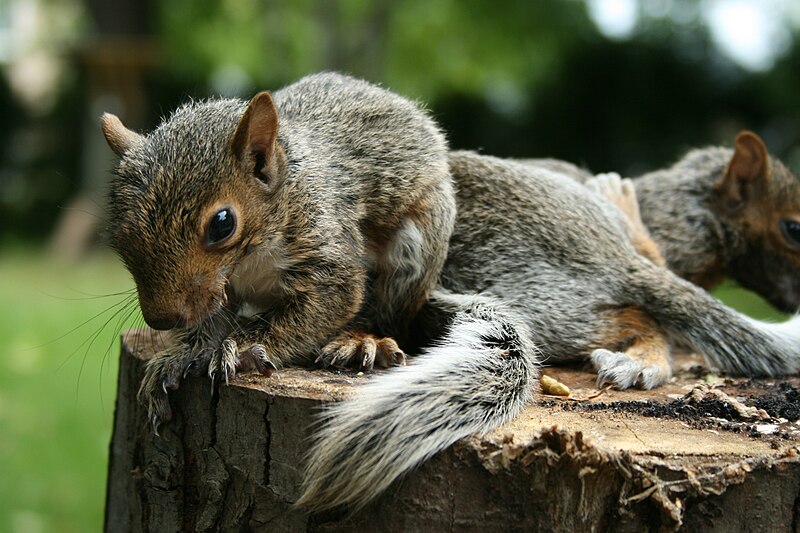
There are a lot of squirrels. Know why? Eastern grey squirrels breed twice a year, the first in January and February and the second in June and July. OK, they have also adapted well to people and steal stuff from bird feeders and nice people who feed them peanut butter on their railing (you know who you are), but the extra breeding really helps up the population quickly. Like bears, food is integral in the breeding - summer broods are usually bigger (anywhere from 1-6 are born each time). They will come out in spring with their babies already set to go (about 8 weeks old they start heading out). And just like in the storybooks they do nest in a hollow tree cavity (or a leaf nest or your attic if all the tree holes are taken).
Where did you say that peanut butter was?

Raccoon
Breeding season is late January or early February but can extend into March, although there's no shortage or raccoons so unless they have ridiculously high standards I think finding a mate would be fairly easy. Young are generally born in May and hang out in the nest for 8 weeks, which isn't great news if that nest happens to be your attic or garage I suppose. Females can breed the next year, which I'm sure helps out with the large population - that and the endless supply of green bins.  

Oh look, unsecured garbage!

White-tailed Deer
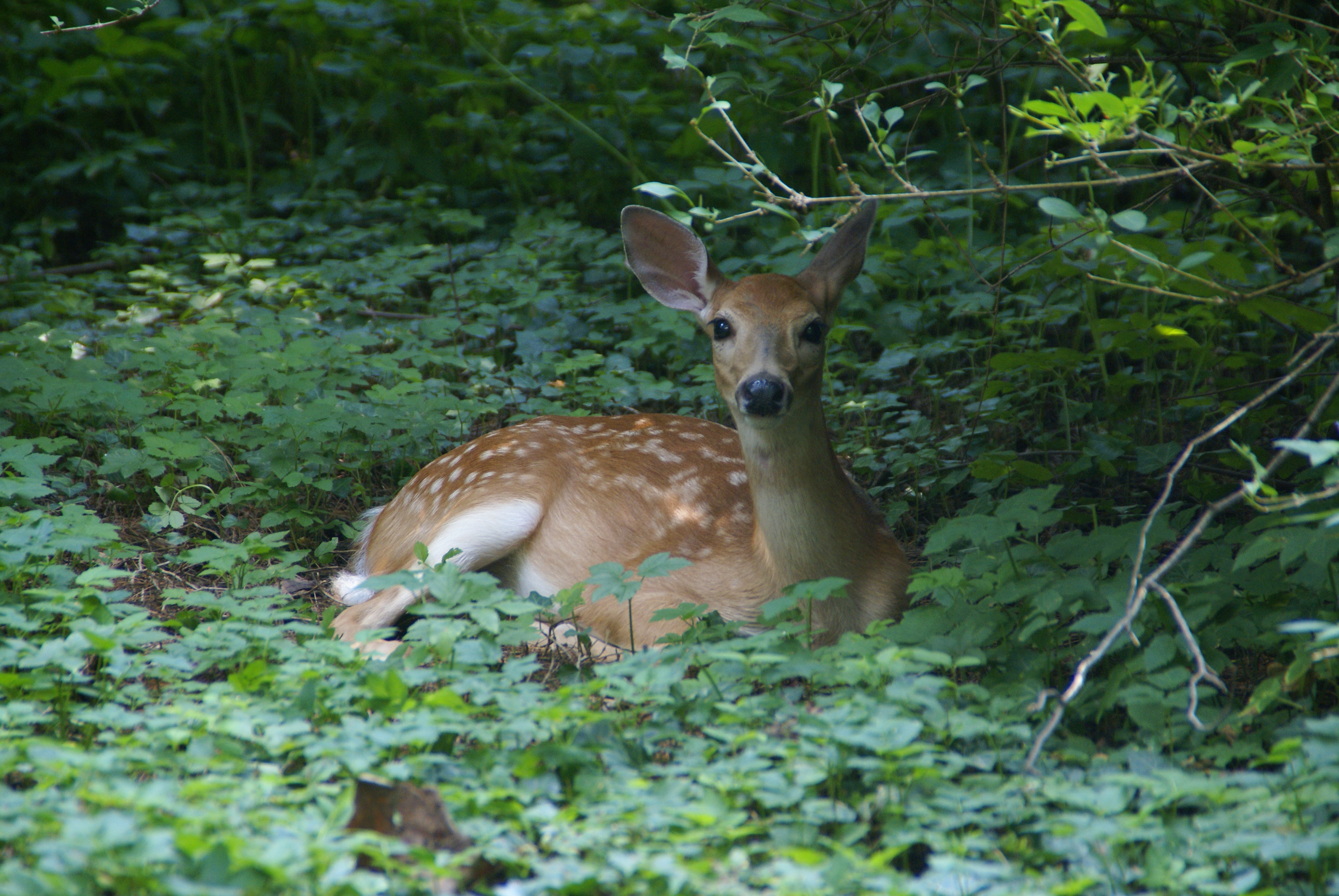
Deer are excellent at reproducing and a herd can double in a good year (see, there's that food thing again). In good years female fawns tend to breed at six to seven months old (I know, it's like a deer teen pregnancy right?) and at about a year have their first fawn. Breeding happens in the winter - November and into early December, with fawns usually born in the May or June. Older females usually have twins (3 and 4 do happen but rarely). After a rough winter or a bad year for food then single births are more common. Amazing how nature just sorts itself out like that. Unlike the others mentioned here there's no hanging out in nest or den, fawns are walking around in a few minutes and are only shaky for about a week. Important public service announcement: Fawns are usually left alone during the day so the mother's scent doesn't attract predators before they can run well. Fawns don't have a scent yet. If you find one please leave it alone where it is. If you are concerned you can check back periodically to see if mama comes back by night (but don't hang out because then she won't). Wildlife centres get overwhelmed in the spring by "orphaned" fawns that were perfectly fine.

S'all good, I'm just hiding.

Groundhog (Woodchuck)
You know you are all doing the woodchuck tongue-twister in your head right now. 
All groundhogs in our backyard are named Daisy. I've tried explaining that they are all different groundhogs and some might be boys to no avail, as soon as one is spotted the cry goes out of "Daisy!" and we must all go to the window to look at this particular Daisy. The young are born in May after a pregnancy of about a month. Four young are usually born, who will then all come under the fence 4 weeks later and eat the random things in our lawn and all be named Daisy.

Practicing their shadow finding

Coyote
Coyotes are fairly monogamous, and couples will remain together for several years, which is better than your average celebrity. Mating takes place mainly during February and March and pregnancy is about two months, so we see little coyote pups (3-7 of them) in the early spring. They are in burrows which they use for a few years in a row and thoroughly clean after giving birth and throughout the 3-4 week hanging out in the den stage. Clearly I would make a bad coyote - while I hung out in my "den" both times but I certainly didn't clean anything thoroughly. 

Playing around...hey look! Rabbits!
 
Eastern Cottontail

So that "breeding like rabbits" saying didn't come out of thin air. Breeding season starts in late winter (Februaryish) and continues into the fall, then they take a break over the winter. They have on average 5 kits at once, but anywhere from 1-12 is possible. Pregnancy lasts a month and the babies leave the nest another month later, completely independent, and it starts all over, for an average of 3-4 litters a year around here and up to 7 a year where it's warmer. The craziest part - sexual maturity is at 2-3 MONTHS of age. About a third of the rabbits will breed the same summer they were born!

All snuggly-wuggly in their nest... oh no, coyotes!

Now, let's hope I've got a while before I have to answer the how... perhaps I can distract her with cute baby pictures a little longer.

We had no sticks and fluff but she was still a cozy spring baby


Mammals! http://www.hww.ca/en/species/mammals/

Photo credits:
Bear: By National Park Service [Public domain], via Wikimedia Commons
Chipmunk: http://www.dcwild.com/mammals.htm
Squirrel: By Luxboyer (Own work) [GFDL (http://www.gnu.org/copyleft/fdl.html) or CC-BY-SA-3.0-2.5-2.0-1.0 (http://creativecommons.org/licenses/by-sa/3.0)], via Wikimedia Commons
Raccoon: By photo taken by flickr user garyjwood (flickr) [CC-BY-SA-2.0 (http://creativecommons.org/licenses/by-sa/2.0)], via Wikimedia Commons
Deer: By David Baron (originally posted to Flickr as Deer) [CC-BY-SA-2.0 (http://creativecommons.org/licenses/by-sa/2.0)], via Wikimedia Commons
Groundhog: By Wobbyball (Own work) [CC-BY-SA-3.0 (http://creativecommons.org/licenses/by-sa/3.0) or GFDL (http://www.gnu.org/copyleft/fdl.html)], via Wikimedia Commons
Coyote: John Harrison [CC-BY-SA-3.0 (http://creativecommons.org/licenses/by-sa/3.0)], via Wikimedia Commons
Rabbit: By Jhansonxi (Own work) [CC-BY-SA-3.0 (http://creativecommons.org/licenses/by-sa/3.0) or GFDL (http://www.gnu.org/copyleft/fdl.html)], via Wikimedia Commons

Wednesday, 9 January 2013

Random Questions


Not all questions need a long answer. Sometimes the answer is simple - like how old do gulls have to be to fly? They fledge around 4 weeks. Done. We had a LOT of questions over the holidays, mostly in the car. While I haven't had a chance to address them all on here, I have been busy racking my brain (and googling) for the answers. A longer post is in the works (warning: contains bears), but I didn't want to ignore the simple things. I've compiled a list here of some of the more interesting things we talked about that don't really require a whole post, a synopsis of our car rides and outings if you will. Think of it as fun little tidbits you can pull out at the dinner table as a distraction.

Example:

Kid: I don't want to eat carrots

Parent: Wolf spiders can spend 36 hours underwater in which they drown and die then later dry out and come back to life. (Seriously, zombie spiders)

OK... so I'm not actually sure that will make your kid eat carrots. Maybe they will then be so fascinated that they forget to complain and eat carrots or maybe they will have nightmares about zombie spiders. Or if you are Bunny you ask where one might get a wolf spider to see if it works and then ask for carrots that aren't cooked.  

So here's some of what we learned on our winter vacation:

  • Squid have 8 arms and 2 longer tentacles for a total of 10 dangly bits.

  • Cacti photosynthesize in their stems, so they don't need leaves. I honestly have no idea if the one on the kitchen windowsill will ever flower.

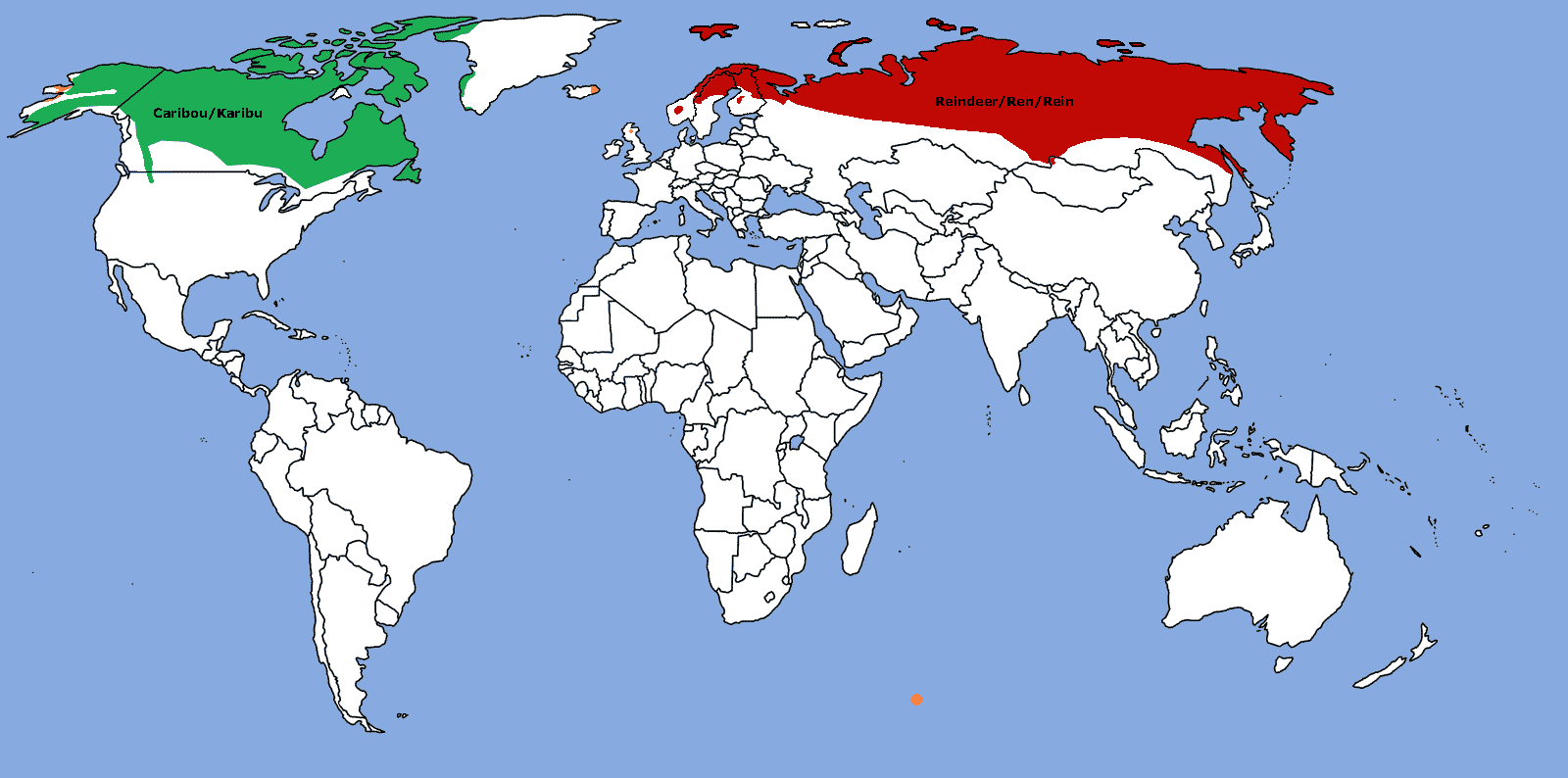
  • Reindeer and Caribou are the same species - Rangifer tarandus. They are just called caribou in North America. So yes, essentially Santa's sleigh is pulled by 8 caribou. The poems and songs are really not specific to the subspecies or continent that they are from. You could also say there is a reindeer on our quarter.
Am I a reindeer or a caribou? I'M BOTH!
(actually I'm in Alaska so I'm a caribou)


File:Rangifer tarandus map.png
A handy map so you don't have a reindeer/caribou faux pas


  • The museum here has a dog-powered butter churn (OK - this wasn't a question, more of a something we all learned together). And it was patented twice which means people were actually using and buying this thing! Thanks to google I now know that there are multiple versions of this. Dogs making butter, what will they think of next? We also learned that people in Victorian times saved their hair in a special little pot and made art out of it. Ew.

  • I don't know why any woodpeckers haven't come by the feeder yet. Yes, I know I said their might be some. Hey look, chickadees! (see - distraction!)

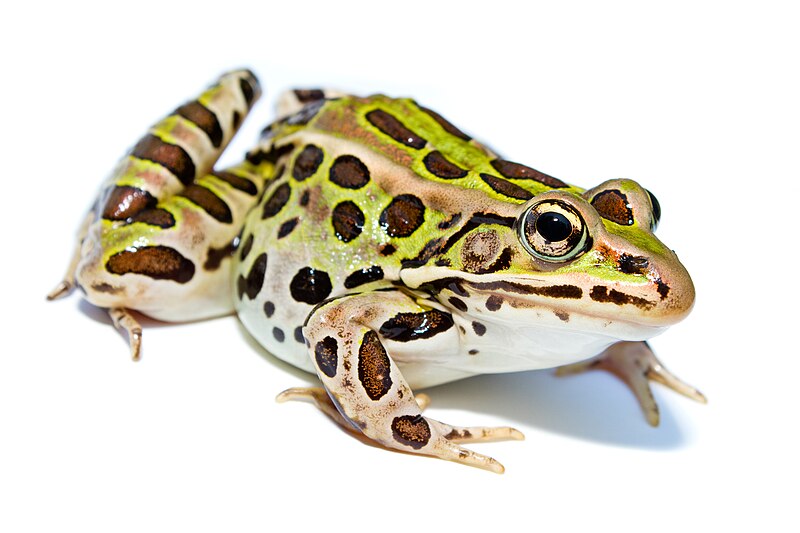
  •  Northern Leopard Frogs live 2-4 years in the wild if they don't get eaten by something.
http://www.flickr.com/photos/briangratwicke/5898747773/


  • Pine needles stay on the tree 1.5 - 40 years depending on the species of pine.

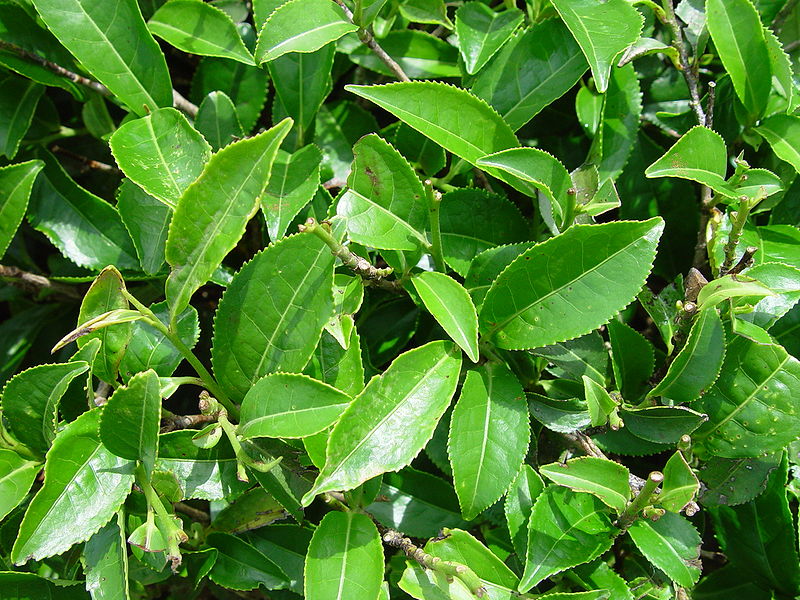
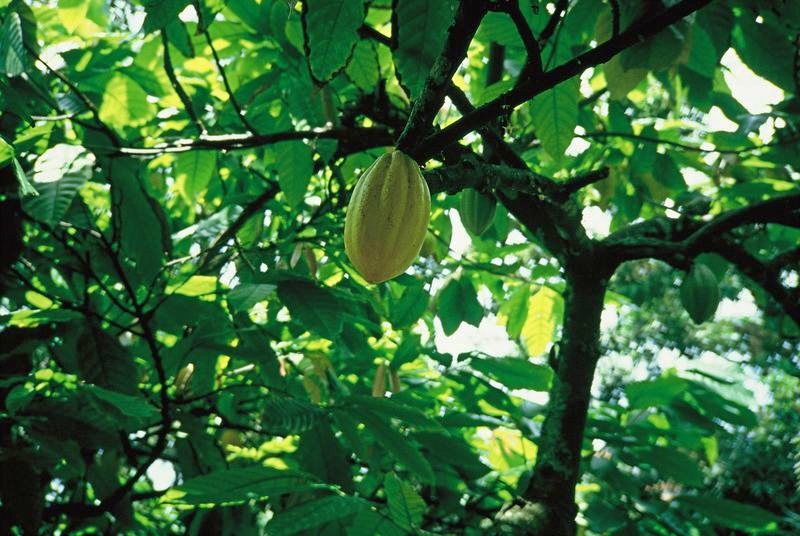
  • Tea is made from the leaves of the Camellia sinensis plant. It is actually an evergreen tree that can grow up to 16m (52 feet) if left alone. Beans loves it, as do I. Bunny prefers hot cocoa which is the seed of Theobroma cacao, which is also an evergreen tree but only grows to 4-8m (13-26 feet). And to round out our hot beverage discussion - coffee is the seed of the Coffea genus which is found inside the fruit. It's the smallest plant of the bunch, only growing to 3-3.5m (10-12 feet). 
Tea


Cocoa


Coffee


    Now watch "Olive the other reindeer" about 15 times and it's like you were with us for the holidays!


    Thanks to wikipedia for the pictures.
    I apologize for any spelling or gramatical errors in this post, my proof reader is 7.


    Wednesday, 19 December 2012

    Bird Food

    There are a lot of winter resident birds around here and Beans is very concerned about them. This may have been partly prompted by the book "Miffy in the Snow" in which Miffy helps a bird in the snow. Her initial question was: "What are they going to eat and can I share my toast? It's getting cold and all their food will be buried in the snow." She’s pretty convinced that chickadees would like strawberry jam (I’m inclined to agree – I mean, strawberry jam is a pretty universally liked food).

    So the easy answer to that is no, no bread. Bread isn’t very good for birds. It's like bird junk food, sure they like it but it can fill them up without providing the fat they need for winter. The opposite of our junk food, which gives us lots of useless fat. That fat is how they keep themselves warm, so maximising their food intake is key to surviving winter. While there is a lot of wild food available to them and they don’t really need us, winter bird feeding can be pretty fun and a good chance to see who sticks around. So we put up some feeders to ease Beans' mind. Prompted by this we joined Project FeederWatch this year because it’s never too early to teach your kids how to collect data and I'm nerdy enough to want to do it in my spare time too.


    The girls were very excited to get their bird ID poster in the mail. OK... I was excited too.

    We have a small hanging feeder and a suet feeder in our yard. Suet feeders are a great choice for winter because they have a ton of fat and also seeds – it’s basically a cage that you put the suet pucks into and hang somewhere. Plus with them you can get woodpeckers, and woodpeckers are cool. I suppose if you were really crafty and had a lot of time and fat on your hands you could make suet pucks and a holder, but I have none of those things and my craftiness ends at gluing stuff to other stuff. I also found a few examples where people just tacked big chunks of fat to a board and put that out, which is an option if you happen to have large chunks of fat you were looking to build something with.

    We do sometimes make pine cone feeders though! Ridiculously easy (just my style) because all you do is take an open pine cone, slap some natural peanut butter mixed with oats or cornmeal on it (I bolded natural here because the birds don’t need sugar and salt and also it’s fun to bold things) and roll it in seeds. VOILA! Fat and seeds – just like the suet feeder. Now that I think about it you could totally use the crunchy peanut butter for extra peanutty-ness. The cornmeal/oats are to make it less sticky and easier to eat, because nobody wants peanut butter stuck to the roof of their beak. If you have a nut allergy in your house (or are opposed to peanut butter) you could do this with lard or shortening or maybe leftover bacon fat – the key is FAT! The nice thing about this project is if you are doing it with little kids it is okay if they eat the stuff (I guess even the lard).

    Regular bird feeders for seeds can be bought or made out of milk cartons, pop bottles, juice jugs…just hang and wait for birds (just make sure there's no sharp edges). A good tip if you are making them is to make sure you put a few drainage holes in the bottom for water or they fill up if it rains (we discovered this the hard way unfortunately). It’s also important to remember that seeds can become mouldy and poisonous if they are wet, so change them often. They are also hard for the birds to get if they are frozen in a solid chunk of ice (yep, hard way again). You can also just fling some seed out on top of the snow on a nice day and see who shows up. The best all-purpose seed is black oil sunflower seeds (not the stripey ones) as it's a favourite of a lot of birds.

     A handy-dandy chart of who eats what!

    OK. Now, it’s all well and good to give them peanut butter and sunflower seeds, but it doesn’t really answer Beans’ real question – what do they eat in winter in terms of wild food? Bird feeding is a relatively new phenomenon and birds have been around for a loooong time, so I’m sure they made it through a few winters on their own. While habitat loss, particularly in urban areas, does make it harder for them there is still a fair bit of food out there.

    Insectivores will dig out hibernating beetles, larvae and grubs from under tree bark. Woodpeckers are still actively tapping away for bugs. Grass seed is still available from those of us who don't mow much and in fields (although harder to access once the snow stays) as are a variety of berries and seeds in woodlands. Poison ivy is actually a great source of food as the fruits (a drupe for those who read the fruit post) stick around all winter. The reaction to the urushiol oil that makes us so itchy is a human-only thing, birds find poison ivy delicious.

     mmmmmm...anyone for poison ivy jam?

    The one thing they do have trouble finding in the winter is water - so next up is a non-frozen bird bath, and maybe a suet plug feeder, and a birdhouse.... Dear Santa.... 

    Some good pages on bird feeding for those who want to know more:


    Thursday, 6 December 2012

    Frogsicles


    The stormwater pond near our house is frozen over. 

    I know what you are thinking right now. So what?  It’s a pond, ponds freeze over in the winter.  So do lakes, rivers and the cup of hot chocolate we left out the other day while tobogganing. But to Beans this was very upsetting news (as was the hot chocolate) because there are frogs in that pond and are the frogs FROZEN?

    She knows enough about ice fishing to know that the fish are ok, they hang out down near the bottom where it's not frozen and people (like Daddy) catch them. Clearly the frogs can't go south for the winter, that is an exceptionally long way to hop. And they don't go down to the bottom of the big lake to hang with the perch. So they are here somewhere, but where? The answer is that they are exactly where they always are - in the pond (or the woods if you happen to be a wood frog). Frogs use a form of hibernation to get through the winter.

    Not surprisingly, aquatic frogs hibernate in the water. The water frogs, like the leopard frogs (the ones with spots) and green frogs (the ones that sound like elastic band guitars) we usually catch, basically go hang out near the bottom where it's warmer and basically sit there until spring. The water temperature at the bottom is pretty consistant at 4°C in the winter, which is why fish, frogs and turtles go hang out there. They are a bit slower (anyone who has tried to zip up a 4-year-olds jacket in -10°C without mittens on knows that you are slower and clumsier in cold) but they even swim around a bit. The turtles bury themselves in the mud at the bottom, the frogs don't because that would suffocate them, so they just sit partially in or on the mud at the bottom. Their metabolism slows down enough from the cold that they don't need to eat and get by on limited oxygen.

    And while that's pretty cool, it's not that overly exciting I know. But wait, there's more!

     
    Hi there! I'm a wood frog and I'm awesome.

    Terrestrial frogs - the wood frogs specifically - do something that will knock your socks off. They freeze. Seriously - they freeze and thaw as the temperature fluctuates! They hop on into a crack somewhere and then just freeze for the winter. They go into suspended animation (like in Red Dwarf - bonus points for awesome british science fiction show reference!) where their heart stops and their brain stops and they are basically a frogsicle - to quote the researcher: "when you drop it, it goes clink". To stop their organs from freezing and collapsing they produce mass amounts of glucose which packs into the cells and keeps them viable. Their body temperature can drop to as low as -6°C. When it warms up they thaw out, their heart starts back up and off they hop!

    Watch it happen:


    And the awesomeness doesn't end there! This is such an impressive feat of nature that it is being studied to help out in human organ transplants. Right now you can't freeze organs for transport, which gives them a limited shelf life and makes it necessary for donors and recipients to be in surgery on the same day, the closer the better. If the frogs method of removing water from organs with special proteins and the extra glucose can be mimicked it means there could be organ storage and longer transport distances. Livers for everyone!

    So, while Beans' fear was true, some of the frogs are frozen, it's okay that they are frozen and now apparently we have to go find one. So if you see a little girl in pink zebra mittens out in the woods in the snow peering into cracks in a log, that's Beans, looking for a frogsicle.


    Sunday, 18 November 2012

    Leaf Collection

    There are a lot of leaves in our house. There are a lot of leaves in our car. There are a lot of leaves in Beans' and Bunny's backpacks, because that's what the mesh pockets on the side are apparently for - leaves. A few leaves have even been through the washing machine, which I suppose is better than the rocks and dandelions that went through it all summer.

    A little Beans with a lovely oak leaf


    We're lucky to live somewhere with a beautiful autumn. People travel from around the world to see fall in central Ontario. Reds, golds, oranges, yellows (yes, it's different than gold) and browns and the hilly landscape gives spectacular views. This fascination with colourful leaves starts early and often manifests itself through obsessive leaf collection. Because you never know when you might see another red leaf quite as pretty as that last one. And of course you then need to glue it to something.


    A little Bunny with a lovely oak leaf

    You can see the question coming can't you.

    Why do the leaves change colour and why are they all different colours?

    So leaves start out green because of the chlorophyll, which is what plants use for photosynthesis to make up their food stores. Basically it helps them turn sunlight into sugar. I wish I could turn sunlight into sugar. No, wait, I wish I could turn sunlight into dark chocolate (which I suppose cocoa trees actually do already). There's usually so much chlorophyll you don't see anything else. Leaves also have other pigmented things in them - carotenoids (yellow/orange), tannins (a waste product - brown) and anthocyanins (produced later in the season - red/purple) but there is usually so much chlorophyll that these other colours don't show up. As the days get shorter the plants slow down their food production and the chlorophyll breaks down allowing the other pigments to show through.

    Cool fact: A banana turing from green to yellow is the same process - losing chlorophyll to reveal the yellow colour!

    The change is triggered primarily by the shortening days. The longer nights mean less sunlight to produce the sugars and slows the chlorphyll production. Leaves are pretty delicate - they wouldn't survive the winter here which is why at these lattitudes they go through the whole process of shutting down and losing their leaves only to grow them again in the spring. A good example of this is if you have your fridge up too high and the lettuce freezes - pretty useless wilty stuff. It's not all for naught though - the leaves decompose providing nutrients into the soil. Nature is pretty good at not wasting. There is some speculation that the anthocyanins in the soil from decomposing leaves will supress plant growth in those areas leading to less competition for the tree the next year. Not bad, nature, not bad at all. And on top of all that the leaves can provide some good habitat too.


    The actual colours themselves depend on what and how much of the pigments are in the leaves. The anthocyanins are not produced throughout the year though and are only present in some species and at different levels - which is why they don't all go red and we get the great variation. Yellows and oranges are already present and revealed as chlorophyll lessens. The type of summer and fall weather can have an effect on the production of these pigments as well, which is why some falls have more vibrant colours than others. A dry, sunny fall with temperatures that stay above freezing at night produce brighter colours. Species wise - oaks vary from reds to browns, aspen, poplar and birch go yellow; dogwood goes red. Maples vary - red maple not surprisingly goes bright red and sugar maple a more orangey-red. Sumac goes a lovely fiery red, which is why I plan to plant some next year.

    I'm a bit late on this one as the colours have already pretty much finished here for the year, but if you happen to be around here Ontario Parks tracks leaf colour and timing in their parks - Fall Colour Report

    So while we do have an abundance of crunchy leaves in the car, it doesn't lessen my love for the fall colours. I've been known to glue a few leaves to stuff myself.


    References:
    http://www.na.fs.fed.us/fhp/pubs/leaves/leaves.shtm
    http://en.wikipedia.org/wiki/Autumn_leaf_color
    http://news.nationalgeographic.com/news/2004/10/1005_041008_fallfoliage.html
    http://scifun.chem.wisc.edu/chemweek/fallcolr/fallcolr.html

    Sunday, 4 November 2012

    Fantastic Fall Fruit!


    Bunny is a pumpkin fanatic – pie, ice cream, muffins, roasted seeds, jack-o-lanterns...even she’s impressed with their versatility. Beans is currently obsessed with apples, but don’t mess with them – just whole please. This sparked a debate on what was fruit versus vegetable and the realization that what things actually are is not what we call them.

    In the botany world pumpkins and apples are both fruits, even though in culinary terms pumpkins and their squashy relatives get called vegetables. This happens a lot – there’s quite a disconnect between what we call things in food related terms versus their actual botanical classification. In the plant world not all fruits are edible, but I would assume that chefs don’t bother classifying inedible things. For example dandelion fluff and maple keys are both fruits.

    Fruits, in plant science terms, are the parts of the plant that are formed from the actual flowers and ovaries. Once the flowers are done and pollinated they magically (ok not really, science only seems like magic sometimes) turn into fruits.


    Fruits serve a specific purpose – spreading seeds around. That can happen by a variety of methods - floating around (milkweed), sticking to your socks and travelling (burs) or being eaten and carried by various animals and being dropped (or pooped!) elsewhere (apples!). Because of these relationships fruit and animals are dependent on each other – this is a symbiotic relationship (any relationship where we get pie is good in my books).

    Beans being symbiotic with an apple

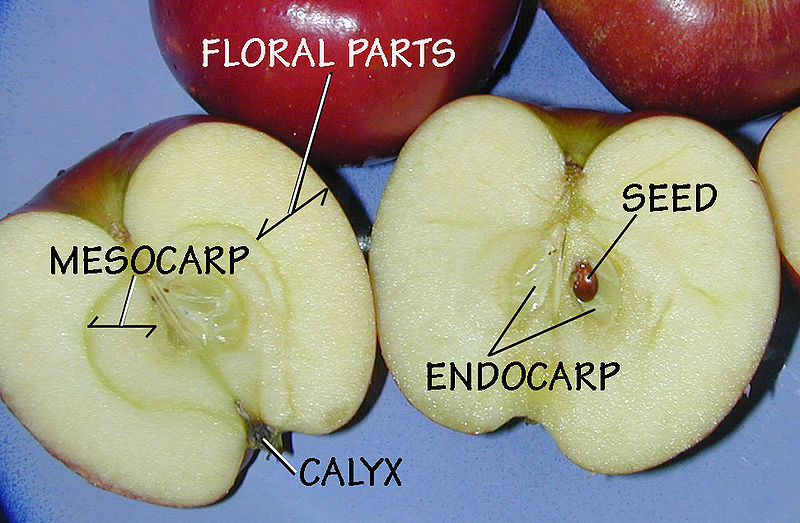
    Apples are in the family Rosacae and are a fleshy, simple fruit called a pome. The core is actually the important part to the plant formed from the ovary, the delicious part we eat is just extra tissue from the flower petals and sepals that fuse with the ovary wall that evolved to make us want to eat and disperse.

    The ovary forms three parts – the endocarp surrounds the seeds and is hard, the mesocarp is next and is fleshier, the exocarp (not pointed out in these pictures but you can see the line) surrounds that and together they form the core. We eat the hypanthium that surrounds the whole deal, and sometimes accidentally we eat parts of the hard endocarp and spit them out dramatically (at least Beans does).  


    Pumpkins are the fruit of Cucurbitaceae plants. The fruit is actually a modified berry called a pepo that has a thick outer rind. Berries are simple fruits where the seed and flesh is formed from a single ovary. Other common berries? Avocado, watermelon, blueberry, cranberry and tomato. What’s not a berry? Strawberry (accessory fruit), cherry (drupe) and raspberry (aggregate fruit). So once again what we call things in real life versus what they are botanically makes no sense.

    Bunny’s very first no help at all carved Halloween berry

    I can’t find a decent picture of the parts of a pumpkin so here’s a watermelon, just to prove it’s a berry, because I got a seriously unbelieving face from Bunny. She was quite willing to accept that pumpkins were a berry but watermelon was a little out there for her. Same deal though – the ovary forms three parts but in this case there is no surrounding tissue that forms the edible part (why it’s a berry and not a pome). The part we eat here is the mesocarp and the exocarp is the hard rind that makes an excellent jack-o-lantern. The endocarp isn’t shown in this one but it’s there surrounding the seeds.


    We all agree though, no matter what you call them – they are still delicious. So whether cooked or raw, pie or plain – we will continue eating lots of fantastic fall fruit (I just wanted to do the alliteration again).