Sunday, 6 October 2013

Jelly Jerry

So somewhere mid-summer we were swimming off the dock when we noticed a large jelly-like mass on the ladder. At first we assumed it was eggs, but it didn't look quite right and was more solid then an egg mass usually is. After a bit of research we came up with Bryozoa, which are more commonly known as "moss animals" for their resemblance to coral or moss - although ours is a bit different jelly-like freshwater species and it is indeed ALIVE! There are 4,000 species of these guys identified in the world. We left that one in the water and unfortunately we didn't take any pictures of it as we were swimming and therefore wet, and well, I'm not one to have my phone with me at all times. But generally it looked like this:

By Triclops200

Fast forward a month or two and we were getting the place ready for winter, which included taking the dock ladder in. And wasn't it covered in these jelly guys! So Bunny took it upon herself to "rescue" them from Grandpa's pressure washer and safely stored them in a costco-sized cashew jar for further observation. She named it en masse Jelly Jerry. Beans helped by putting in some small pieces and naming them Veronica (no doubt influenced by the large Archie comic collection stored in the cabin). 


Jelly Jerry in a Jar

So, what the heck are Bryozoa and why is it attached to the dock? 

They are a teensy weensy aquatic critter that lives in colonies. The little guys themselves are microscopic, but they get together in such numbers that the colonies are visible and can actually get quite large! Check out this article of a giant one! The ones we found are a gelatinous species that are native to North America and they do love to hang out on docks or other submerged wood - so we essentially found it in a "natural" habitat. I would assume this would mean originally they like submerged logs and the like, but we have a bunch of boards all together in a large rectangle which it seems to be fond of. They are filter feeders and eat things like algae, bacteria, protozoa and other microscopic things, which make sense as they are also microscopic. And they are helpful little guys in that they improve water quality with their filtering (which is just eating to them). Stuff eats them too and here in Georgian Bay that's snails, insects and fish. In the ocean it would be sea slugs, sea urchins, starfish, crustaceans and fish.

The gelatinous material is secreted by the zooids (fancy name for the little guys individually) and they stick to it. So the "jelly" is like their house. Every summer they release small larvae that swim away and establish new colonies, which may explain why there were SO MANY on the ladder of all different sizes (I'm really kicking myself now for not having my camera). Super cool fact: they don't have a respiratory or circulatory system - they absorb oxygen and eliminate carbon dioxide right through their body.

General anatomy of a bryozoan


Bunny is pretty entranced by the whole deal and the fact that these are tiny creatures in there she can't really see. It's kind of like magic creatures to her. So we've put them in a clear jar with some freshwater so she can take Jelly Jerry to school. Hopefully her teacher likes magical jelly lake creatures too.

Jelly Jerry in his new clear water for school

Pleased with her new Jelly "pet"
Photobomb by Beans who cannot eat a cookie
without getting it entirely all over her face.


Where we learned from and LOTS more stuff about Bryozoa:

Tuesday, 24 September 2013

Chomp Chomp

Bunny has been losing teeth for a while now - with 8 now having gone under the pillow. Naturally this has brought up some teeth questions such as: How many am I going to lose? (Quickly calculated as how much money can I make off this "tooth fairy" character). How many teeth does the cat have? How come some are pointy? Etc, etc... These discussions usually end with Beans desperately yanking on her teeth in hopes that she'll get a toonie under her pillow shortly. This has recently increased with one of her buddies losing 3 in the past week.

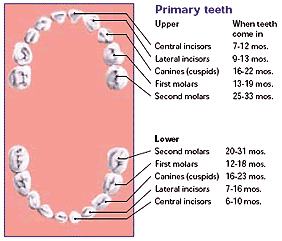
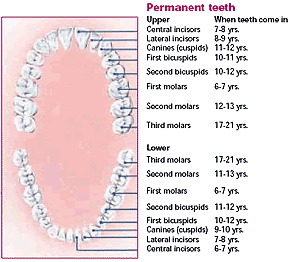
Tooth pictures borrowed from the Canadian Dental Association

Humans have 20 primary teeth (also called baby or deciduous teeth) and 32 secondary (permanent) teeth. Why the difference - we don't have the same amount of molars as a baby and there's an extra set of bicuspids that come in, and those just come in at various times and we keep them, and there's the whole wisdom teeth thing. Only the first set of teeth fall out so, if all goes according to plan, there will be 20 visits from the tooth fairy. The crazy thing is that they are all in there, some of them are just hiding and waiting!


Look at 'em all in their little slots just waiting!
Bunny thinks this picture is cool
Beans does NOT want to look at it again

Tooth strategies go along with eating strategies. There are the three basics - carnivore (meat), omnivore (everything), and herbivore (plants). Then there's some specialties within those - like insectivore (insects) and piscivore (fish) in carnivore and gnawers (rodents) vs grinders (deer, cow, moose, etc) in herbivore, but for the most part mammals fit into one of those three main groups. Humans evolved as omnivores - so we have teeth for tearing and biting, but also ones for grinding - pointy in the front, flat in the back (like the bear below). Think about the different ways you would eat different types of foods - we thought about chicken drumsticks vs salad - and how you used the different parts of your mouth for different eating "jobs", you couldn't chew lettuce with your front teeth or tear chicken with your back ones. And as Bunny pointed out, ice cream doesn't need teeth, so if she loses more she could just eat ice cream. Nice try Bunny - icecreamivore isn't a thing.


Herbivore (Deer), Omnivore (Bear) and Carnivore (Cougar)
From: http://www.skullsunlimited.com

I asked the girls to each pick an animal so we could look at it's teeth. Luckily they each picked very different ones, although both are mammals, so we're not looking at two of essentially the same thing. That could have totally backfired on me!

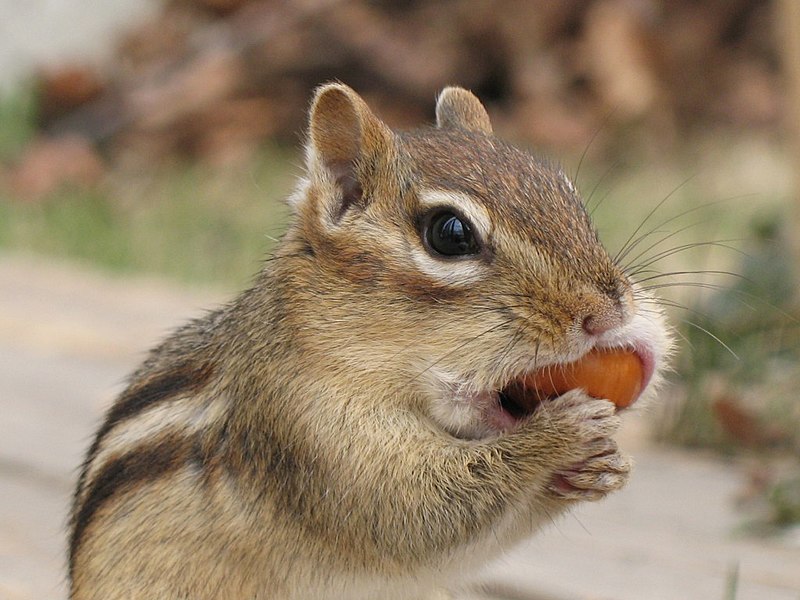
Bunny's Choice: Chipmunk
I think this choice is influenced by our extraordinarily busy chippy that lives in the yard and fills our downspout with stuff. He's been whipping around lately getting ready for the snow and has dug a cache in our plant pot out front (which reminds me I should get the mittens out as we've already had some frost). Bet you all thought chipmunks were herbivores (Bunny did) - well you all would be wrong! Omnivore! They eat bulbs, seeds, nuts and grains but also insects, worms, frogs and bird eggs. However, as it is mostly seeds, cones, and veg based, they do have the continuously growing prominent front teeth of the rodent family - because of the amount of "nibbling" they do, rodents wear out their teeth quickly so the continuous growth means they always have something to bite with. Along with their four sharp, chisel-like incisors, they have flat back grinding teeth as well.

Chipmunk Skull
Large incisors and flat "grinders"
From: http://www.skullsunlimited.com
I'll just tuck this away here for later....
By Gilles Gonthier from Canada via Wikimedia Commons

Beans' Choice: Lion
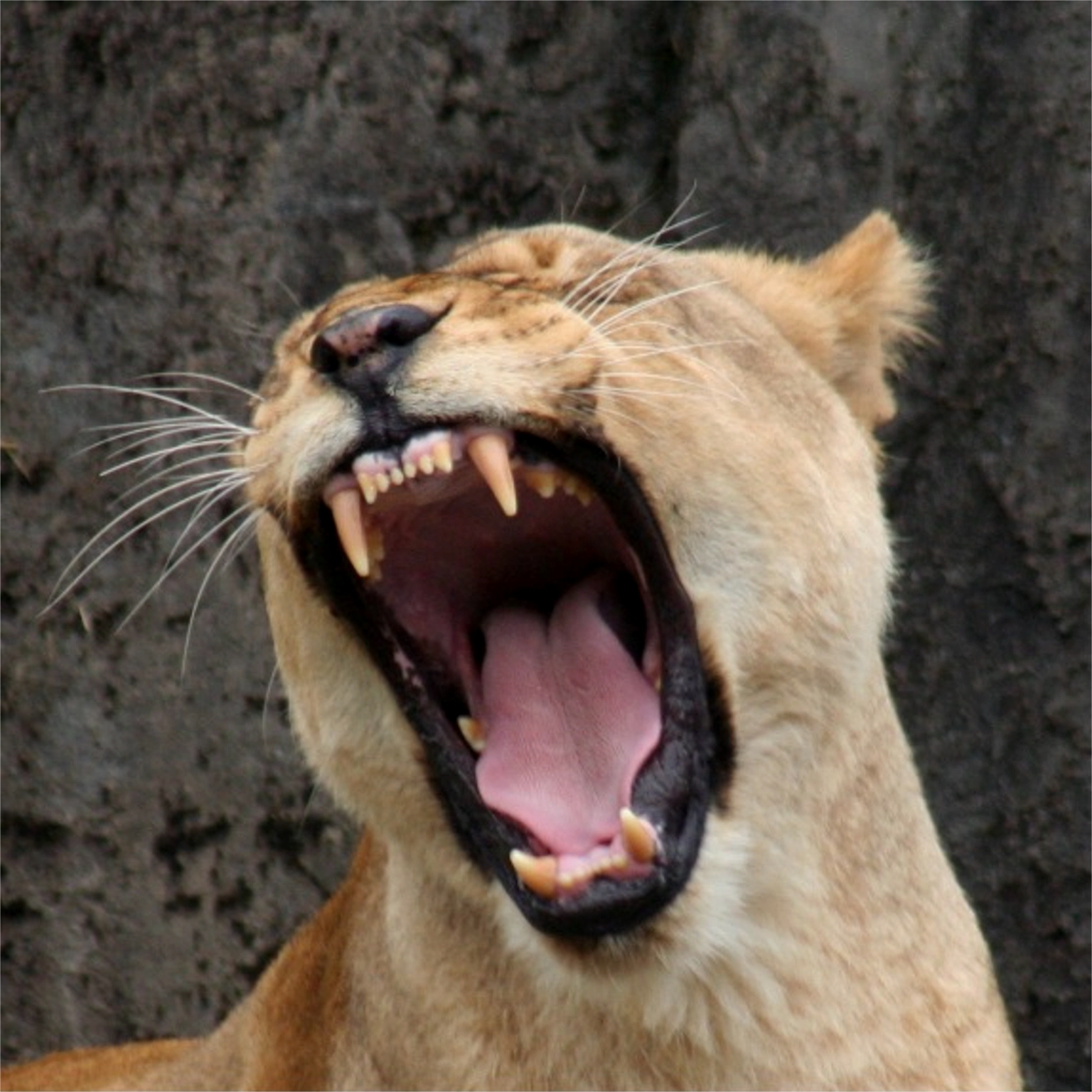
I assume this is prompted by our recent zoo visit at which lions and elephants were her clear winners. Personally, I thought the hippo who did a sashay runway walk for us was quite delightful. Lions have 30 teeth, so pretty close to us. That's pretty much where the similarity ends though - Lions, and cats in general, eat pretty much one thing - meat. Unless you are our cat Havoc, in which case you also include house plants, strawberry tops, lettuce and the much coveted "outside grass". They only have tearing teeth - everything is pointy with no flat "grinders". A lion's back teeth are like a pair of scissors which basically cut up whatever zebra or wildebeast happens to be dinner. There is no chewing at all - they basically swallow chunks (which is why I suppose when Havoc throws up the plants that they are indeed in chunks).

My how pointy your teeth are!
All the better to eat you with, my dear...
By Brocken Inaglory (Own work) via Wikimedia Commons

Oh yeah - domestic cats have 30 adult teeth, they have 26 baby teeth and lose them. So somewhere out there is a feline tooth fairy leaving sardines under a pillow.

Here's a super fun game about teeth! (click it for a bigger version)


Wednesday, 11 September 2013

Fire and Water

We are a campfire family. There isn't much we'd rather be doing on an evening then hanging out around a campfire. There's just something so relaxing and meditative about watching the flames or, even better, roasting something on them. In fact, one of my favourite presents this past year was a s'mores roaster - that's right - the WHOLE s'more gets toasted, not just the marshmallow, made exceptionally better by the use of dark chocolate and occasionally the addition of peanut or almond butter. No one can deny that fire is pretty awesome and people and fire go wayyy back. Plus there is the ever exciting "adding a log" or "poking with a stick" - a good fire pokey stick is intrinsically important. We don't really care where the fire is - park, shoreline, backyard - anytime is fire time (except during fire bans obviously).

Fire + Food + Goofy Children = Awesome family time

We've taught Beans and Bunny from a very early age all about fires and fire safety. The important rules like no running near the fire, keep a bucket of water nearby, don't leave a fire alone (they get lonely) and don't put your marshmallow directly in the flame. It was one of those rules that prompted this post - the bucket of water. It wasn't the why of it, they know to keep it there in case the fire jumps out of it's little circle and for end of the night dousing. It was the how - how does the water stop the fire?

It is hard to take good campfire pictures at night with a phone

The answer to this one is pretty simple so to make it a nice, well rounded post I'll also put in assorted random campfire pictures of us or food or us with food.

Who doesn't love cooking stuff on a stick - SPIDER DOG!

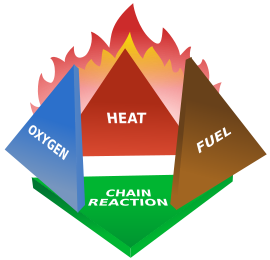
To answer the question we first have to know how fire works. A campfire is an exothermic reaction involving the release of energy rather than endothermic, one that sucks in energy, which is why it has a lovely glow and toasts things. The burning of wood is combustion - a rapid oxidation reaction that releases energy in the form of heat and light. To catch things on fire you need three things - fuel/combustible material (wood), and oxidizer (oxygen) and a heat source that gets it past the flash point of your fuel (lighter - which does it's own mini reaction with a gas, oxygen and a flint spark). Once lit the whole thing continues in a chain reaction and it sustains itself by it's own release of the heat and with a continuous supply of fuel and oxygen it will keep going (the aforementioned "adding a log" fun). 


Behold! I have combined wood, oxygen and heat! Muahahaha!

Stuff fire needs

To stop fire you need to take away at least one of the things it needs. Water takes away two - it stops the fire from being able to access the free oxygen in the air by displacing it and it turns to steam (usually quite dramatically), which carries the heat away from the fire and lowers the temperature back down so it no longer burns. Even though water has oxygen in it, it is bonded to the hydrogen and not accessible for the combustion process.

Cool Fact: Astronauts can't have campfires because the process depends on gravity to constantly supply the fire with oxygen. Without gravity the fire will quickly have only have only it's own combustion products surrounding it and extinguish itself.

Astronauts cannot have this fantasticness.

And now, as promised, more pictures of campfires:

A nice Georgian Bay shoreline fire
Cooking stuff on a stick is good, but this is a definite step up!
A little Bunny + A little fire
Everyone loves Bannock-On-A-Stick. Extra good with maple syrup.

Click here for some tips for safe campfires!

Friday, 6 September 2013

ONE

Bunny and Beans are outside

Well, it's been a whole year of blogging. I've had a lot of fun writing about the adventures of Beans and Bunny and all the questions they've come up with. I hope you've enjoyed reading about us and maybe even figured out a little about our crazy amazing world and the science and nature that make it tick.

Read our very first post here

Beans and Bunny are very involved in this blog. They not only ask the questions, but they help find the answers (OK, Bunny a bit more since she can read more than random letters, "and", "is", "the" and her name) and then the most important thing - they then know the answers and can spread that fascination of nature to all they meet. And they do - just last week Bunny explained all about crane flies to her camp group (including the counsellor) who were calling them "giant mosquitoes" - I feel a great many crane fly lives were saved that day. As knowledge grows, so does respect and care - and that's really what is important. Plus Beans explaining watermelons are a berry to a random lady in the grocery store is highly amusing.

But enough with the mushy stuff. Thanks for reading and sharing and helping us grow this past year. There's a never ending supply of questions in their heads so I don't see us stopping anytime soon.

And I swear, someday I'll finish that book.


Tuesday, 3 September 2013

Fish Breath

First off, this is another post with a sountrack. Another good Canadian band too. So hit play and then read the rest. Or watch the video and then read it, or play it again for the reading part... really, it's up to you.


Alright. So this question has now been asked independently by both girls, so it's high time we addressed it on here. Bunny asked in relation to one of her favourite pastimes - fishing. Now even cooler with her new birthday fishing rod that LIGHTS UP with LED lights when you reel in. Spinning lights and multicoloured fluffy lures - what more could a little girl ask for. She was standing on the dock, staring down at the fish, which were currently not being fooled by her pink, sparkly bait. How do fish breathe underwater?

Above all, fishing teaches you patience

Or in Beans' case - how come she can't. Her version came from in the lake: "Are you SURE I can't breathe underwater? Like really really sure? Dory can though?" (Dory is her Betta, Bunny's is named Flamingo) And then me convincing her that really, it's not in her best interest to try and handing her a snorkel. Then a few days later as that Metric song came on in the car - "Are you REALLY SURE? Because this song is about breathing underwater" and "How come I can drink water but not breathe it?" - which was easy to answer because they already knew about the whole two pipes thing for breathing and eating and just required a short update to include the epiglottis.


Beans' fish impression

It is a good question, because fish do breathe and need oxygen circulation just as much as we do - they just do it very differently and in a whole other substance.

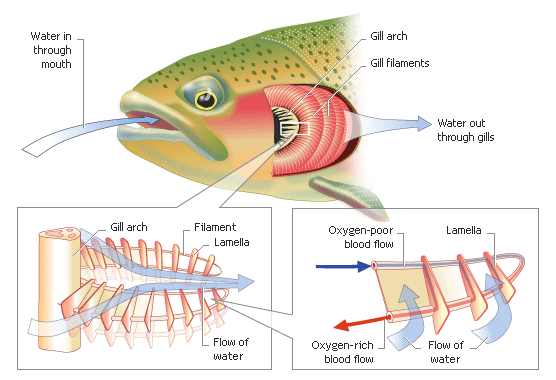
There's two main kinds of fish: Bony fish (osteichthyes) and Cartilaginous fish (chondrichthyes) but in general the mechanics and equipment for breathing are similar. In order to breathe, fish take in a mouthful of water, pull the sides of its throat together and force the water through the gill openings where is passes back out to the lake/river/ocean/aquarium from whence it came. Gills in general too are built the same. They have a large surface area to gather a lot of oxygen at once and a good blood supply so that oxygen has somewhere to go.  In a litre of freshwater the oxygen content is 8 cm3/L compared to 210 cm3/L in the same volume of air, so they need to be pretty efficient. 


Water flow for breathing
Gills for real (from a tuna)
This Wikipedia and Wikimedia Commons image
is from the user Chris 73 and is freely available at
 //commons.wikimedia.org/wiki/File:Tuna_Gills_in_Situ_cut.jpg
under the creative commons cc-by-sa 3.0 license.

Bony fish (bass, pike, perch, bettas, general things we think of as fish) have an operculum - which is a bony cover over the gill that can be used regulating the flow of water. This allows them to breathe without moving and to maximize their oxygen intake with a countercurrent flow. Oxygenated blood moves through the gills one way while de-oxygenated moves the other way, not too far off from how our artery-vein system interacts with our lungs. This is why when they are still you see the plates moving in and out, pushing water over the gills to keep up with respiration.


Countercurrent flow for efficient breathing
http://www.myuniversalfacts.com/2006/03/how-do-fish-breathe.html

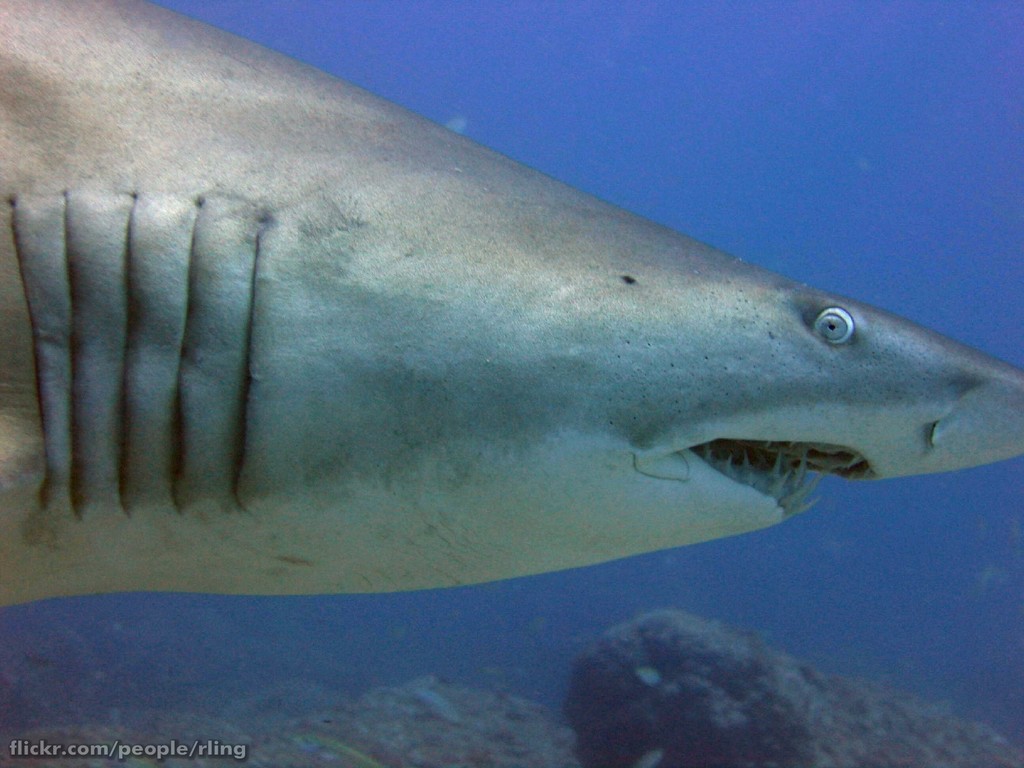
Many cartilaginous fish (sharks mostly) don't have operculum or the ability to pump water so they need to continually swim to keep water flowing over the gills. Gives new meaning to the little ditty from Finding Nemo, eh? "Just keep swimming" - they literally have to in order to breathe! Because of this they don't have the efficient countercurrent flow that bony fish have and why it sucks for them to get trapped in a net - no movement = no oxygen and they suffocate.

Open gill slits in a Nurse Shark
http://earthguide.ucsd.edu/fishes/kinds/pop_parts_gills.html

So Bunny is now vigilant to get her fish back in the water quickly. And as Beans has lungs and not gills, she can't force water over them the same way that Dory does any more than Dory can come up here and breathe air. Which means she is stuck with that snorkel for long term swimming (and I suspect scuba is in her future).


Tuesday, 27 August 2013

The ants go marching

There is just something about kids and ants. Bunny has always been fascinated by insects, but ants in particular. I think maybe it's because Bunny and the ants seem to have a lot of the same qualities. Now some of them bite you with formic acid, which thankfully Bunny does not do, but for the most part they are tiny, hard-working and persistent, like my Bunny.

Here is a good example of how much Bunny likes ants. We went on a birding outing in Florida and we saw the endangered Florida Scrub Jay. Super cool right? Well it was, but then Bunny found ants:

Florida Ants! (yes, it was that cold there)

And so then we spent a good 20 minutes with the ants (we still got to see the birds lots though, don't worry).

She goes out on the back rocks at her grandparents place with crackers and raisins and "feeds the ants". She loves watching them dismantle the large pieces to fit it down into the cracks in the rock or work together to lift a raisin and stuff it down a hole. Just the other day I noticed my 2 year old nephew staring intently at a tree. I asked him what he was looking at and he gleefully replied "ANTS!" and Beans and her new friend intently watched ants march around on a rock for a good 15 minutes until the camp bus arrived. So maybe it's genetic.

And here we are looking at Ontario ones

There are more than 12,000 known species of ant in the world but it is estimated that there may be upwards of 20,000 actual species out there. That is a LOT of ants.

But what Bunny wanted to know is how they all work together. When she puts a piece of triscuit down on the rock - how do they find it, know who is carrying what side or whether it's too big to fit in the hole. Can they "talk" to each other?

Busy dismantling

So, to answer that we need to know a bit about ant social structure. Ants have a queen and her job is to lay eggs. That's it, she doesn't get to order other ants around or get fanned while eating grapes. Eggs, eggs and more eggs. It's an important job because the future of the colony rests on her eggs. Then there are male ants - in many colonies, they also have one purpose. Mating. Then they can die. Yeah, male ants don't do much. The colony itself is run by the worker ants, who are wingless females that never reproduce. They get the food, care for the eggs and baby ants, build the nest, protect the nest and generally do everything. So chances are, all those ants you see out there are girls.

They found the hidden popcorn!
Now, all the worker ants are out there running around, they need to tell each other stuff. Important stuff like if anteaters are coming or if kids are putting triscuits near their nest. They do this with a combo of pheromones (chemical signals), sound and touch. They leave trails on the ground which other ants can pick up using their antennae, which are sensitive enough to figure out the direction and strength of the scent. So say one of them finds a triscuit - it leaves a trail back to the nest which all the other ants then follow back to the triscuit, then as they carry the pieces back they keep remarking the trail. If you put a rock in the way they will scatter and then whoever finds the food again makes a new trail back to the other ants, allowing them to adapt to change really well. Some ants also produce sounds using their mandibles that can be used to call for help and some ants when crushed send out a pheromone attack signal. 

So a plea from Bunny - please don't squish your ants, sit down and watch them instead. Build them a bridge or a puzzle to figure out. Maybe give them a snack.


If you've got awhile and a cup of tea, here's a great talk about ants:
http://fora.tv/2009/07/23/Ants_The_Invisible_Majority_with_Dr_Brian_Fisher


Wednesday, 21 August 2013

Bats (for Aunt Mary)

My Aunt Mary has some mixed feelings about bats.

I'm not going to try to convince her to invite them in for tea or anything, but I thought I'd write her up a blog post about bats for two reasons. One - bats are a really important part of the ecosystem (which she knows, but just doesn't want them in her house - which is fair enough) and Two - I can post lots of bat pictures which she will just love (this is sarcasm by the way). Really it's a win-win (it's ok, my family has that type of humour).

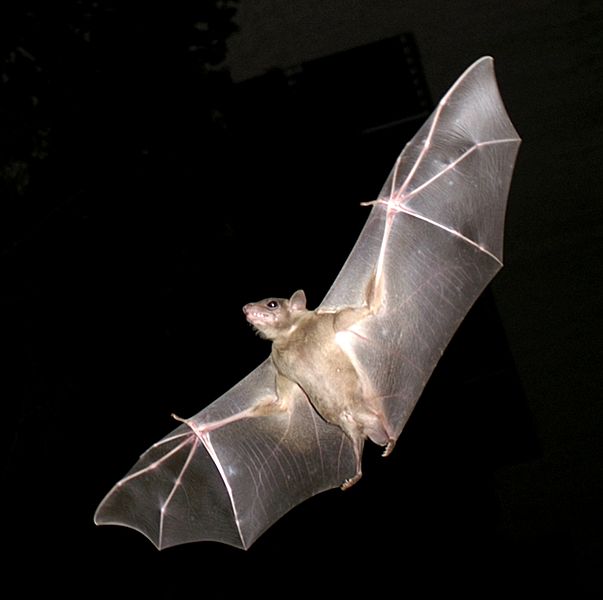
Just to get us started!
pic from here

On our trip to Wisconsin (where Aunt Mary is) we did a lot of sitting around the campfire, catching up, reminiscing, singing and telling a lot of humorous stories. It was during one of these fireside gatherings that Aunt Mary told us her true feelings about bats, funnily enough while a large number of them whizzed around above us. The specific story involved the original cottage on their property, which was home to a great number of creatures besides themselves - including some bats. One night there was one flying around indoors but luckily Uncle Al managed to trap it. However, when Aunt Mary went in to the bathroom there he was in all his bat glory, between the window pane and screen, pressed up against the glass, watching her every move. That old cottage has since been replaced and the bats (for the most part) relocated to a snazzy new bat house, so the incidences of house bats has greatly decreased (but maybe my dad heard a few in the soffits, shhhh....).

As with most things in this blog, it'll be fairly Great-Lakes-Region-centric because that's where I am and what I know. And one thing I noticed about the area of Wisconsin we were in is that boy, does it ever look like our area of central Ontario. The plant species, timing and overall ecology were very similar - which makes sense when you consider where we are and where they are happen to be directly across from each other (with a few big lakes in the middle, which makes driving there a bit awkward).

So, bats. They get a bit of a bad rap, what with the whole scrunchy face thing and vampire connections and Beans' hero Batman, while giving a heroic spin on bats, still plays up the whole darkness and living in a cave thing. But bats here are insectivores, preying quite a bit on mosquitoes - so they are quite handy to have around on a spring or summer evening around a campfire.

I invite Aunt Mary and you to meet our local bats:


The largest bat we have is the Hoary Bat, which means frosted (like hoar-frost) because it has white-tipped hairs. They are tree dwellers and because they are larger they eat larger insects - like dragonflies, beetles, and moths.


Big Brown Bats are also here (and the majority of Canada). They are hibernators, so they are here year round in mines and caves. 


Little Brown Bats (such creative names...) are the most common bat in Canada. 

Northern Long-eared Myotis. Another cave hibernator.


Red Bat. A solitary bat which migrates south in groups in the fall and winter. This one roosts in trees and shrubs in the winter.


Silver-haired Bat. Looks a bit like the Hoary, but is dark brown with white "frosting" on the back and abdomen. A forest dweller in southern Canada and roosts in logs or under bark. It likes to eat moths and migrates south in winter.


Tri-coloured Bat (Eastern Pipistrelle) is the smallest bat we have and is multicoloured - grey, yellow and brown. Another cave hibernator.


Eastern Small-footed Myotis is another little guy and the least common we have here in Canada. It's a late hibernator and has a slow, erratic flight. 


All bat mugshots were borrowed from here: http://www.batcon.org/ - they have lots of species listed as well as ranges, so you could find some bats near you.

Super Awesome BAT Facts:
  • Bats are the only flying mammal in the world. Others can glide but no one else can do sustained flight.
  • Bats can live up to 20-30 years.
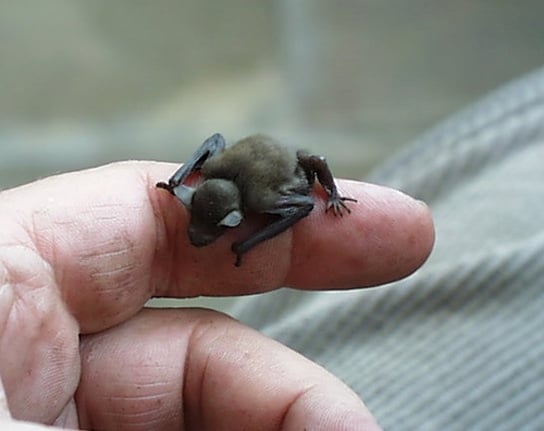
  • The smallest bat in the world is Kitti's Hog-nosed Bat (Craseonycteris thonglongyai) aka the "bumblebee bat" from Thailand and Burma. At 29 to 33 mm in length and weighing in at a teensy 2g it may also be the worlds smallest mammal!
  • The largest bats in the world are the Flying Foxes, with wingspans reaching 2m. They belong to the aptly named "megabat" suborder and eat nectar, pollen and fruit. They do not use echolocation like their "microbat" counterparts.

Kitti's Hog-nosed Bat
Spectacled Flying Fox
  • There are three species of vampire bats, which do indeed exist on blood. The common vampire bat (Desmodus rotundus), the hairy-legged vampire bat (Diphylla ecaudata), and the white-winged vampire bat (Diaemus youngi). All three species range from Mexico to BrazilChile, and Argentina.
  • A brown bat can catch up to 1,200 insects an hour.
  • There are 1,100 species of bats in the world.
  • Bats have only one pup a year.
  • Insectivore bats hunt by ecolocation - they produce sound waves that bounce off of their surroundings and help them navigate and locate prey. 
If after all that you still remain unconviced on the awesomeness of bats (although I don't see how you could), here is a lovely video of them catching moths in slow motion. Plus the second guys ears are fabulous!


Now for the sad PSA part of this post. There is a virus that is killing North American bats. It's called white-nosed syndrome (WNS) and is already responsible for millions of bat deaths. It is found in cave hibernating bats and is easily spread through the close quarters over the winter months. It causes them to have erratic behaviour and wake from hibernation - essentially starving them to death. Believed to have originated and spread by recreational cave exploration in the north-eastern US, it's now a serious problem that may wipe out some of these species. Please don't visit caves with bats (which is stressful for them anyway) and if you do please clean and disinfect all equipment before going to another cave. And report all sightings of WNS or unusual bat behaviour (links for more information below).

And now everyone together: 

Twinkle, twinkle, little bat!
 How I wonder what you're at!
Up above the world you fly,
Like a tea tray in the sky.
Twinkle, twinkle, little bat! 
How I wonder what you're at!
-Lewis Carroll 


Where we learned about bats:
http://www.hww.ca/en/species/mammals/bats.html
http://animal.discovery.com/mammals/13-incredible-bat-facts.htm
http://science.howstuffworks.com/zoology/mammals/bat2.htm

More on WNS:
http://www.mnr.gov.on.ca/stdprodconsume/groups/lr/@mnr/@fw/documents/document/278529.pdf
http://www.nwhc.usgs.gov/disease_information/white-nose_syndrome/
http://www.mnn.com/earth-matters/animals/videos/assignment-earth-white-nose-syndrome-in-bats